
Last updated October 15, 2026
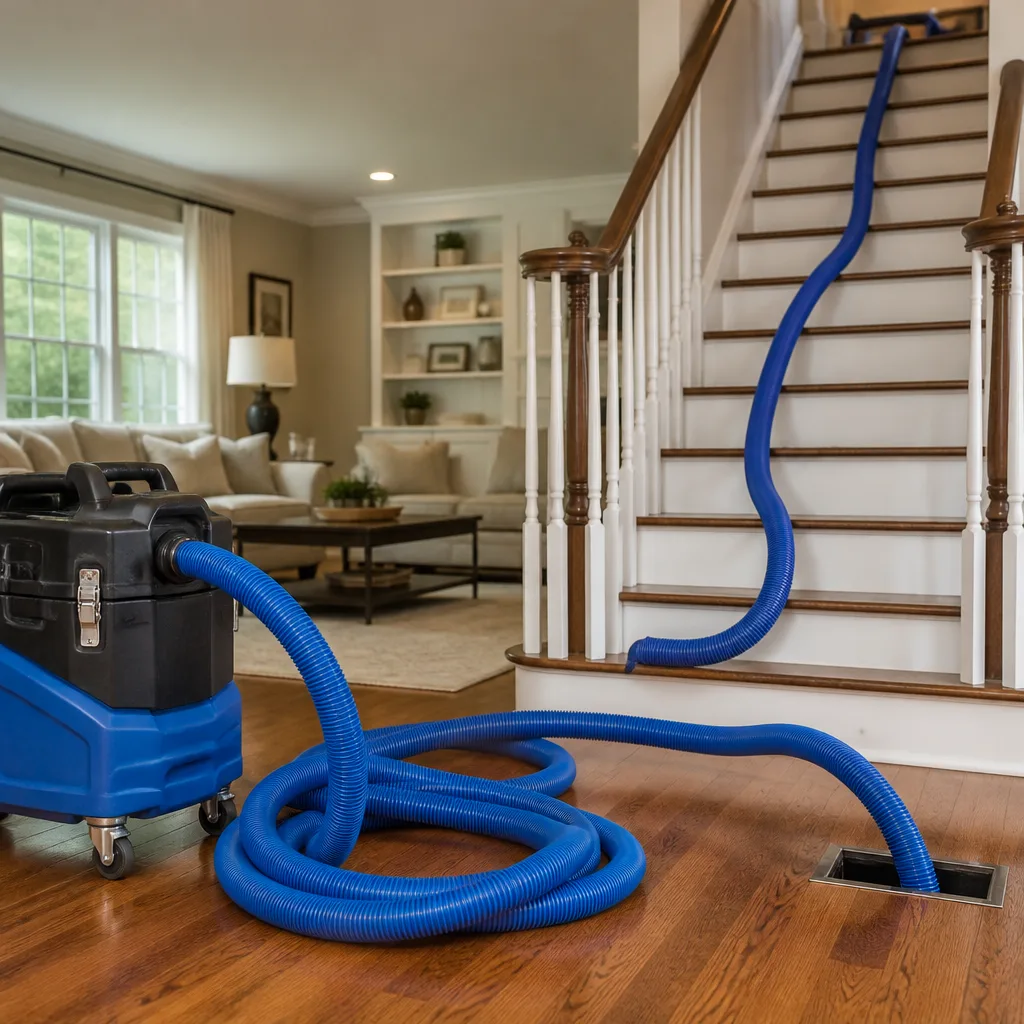 Whole-home duct cleaning
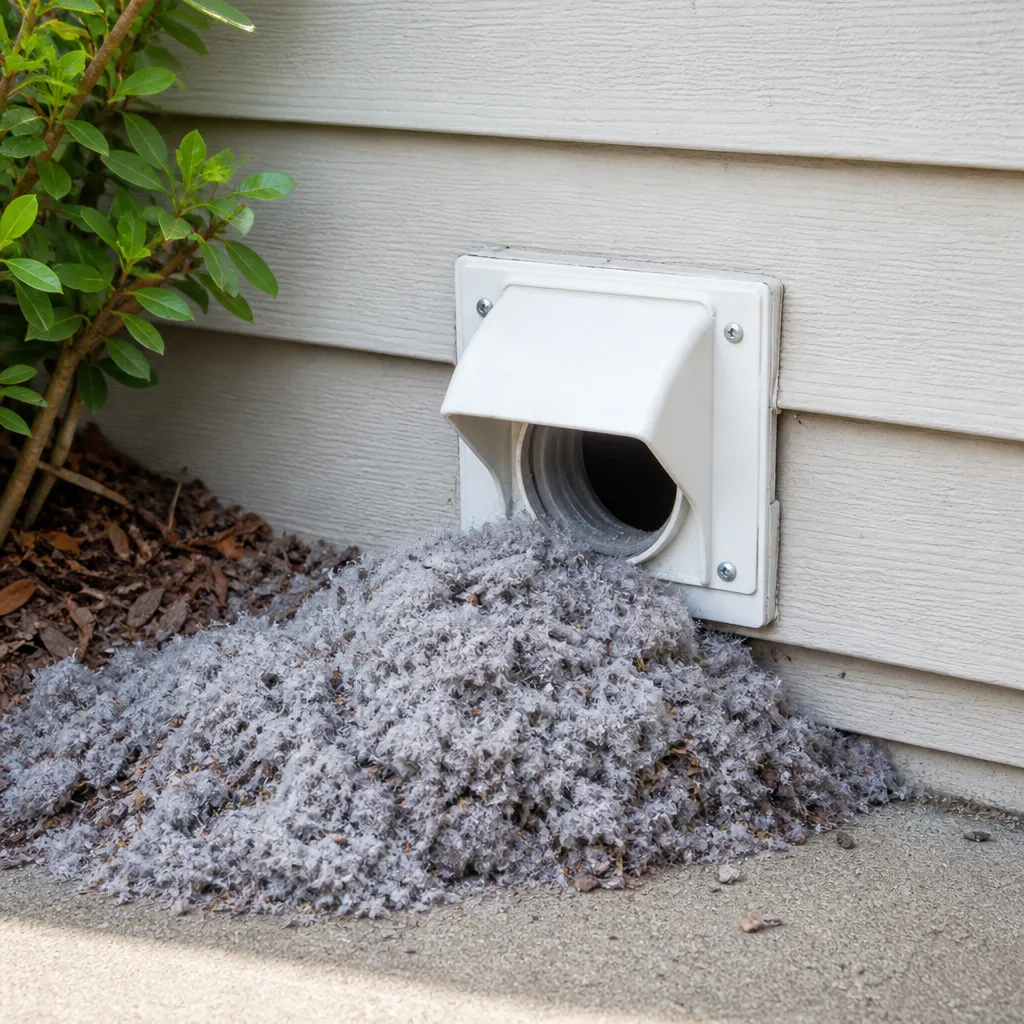 Dryer vent cleaning
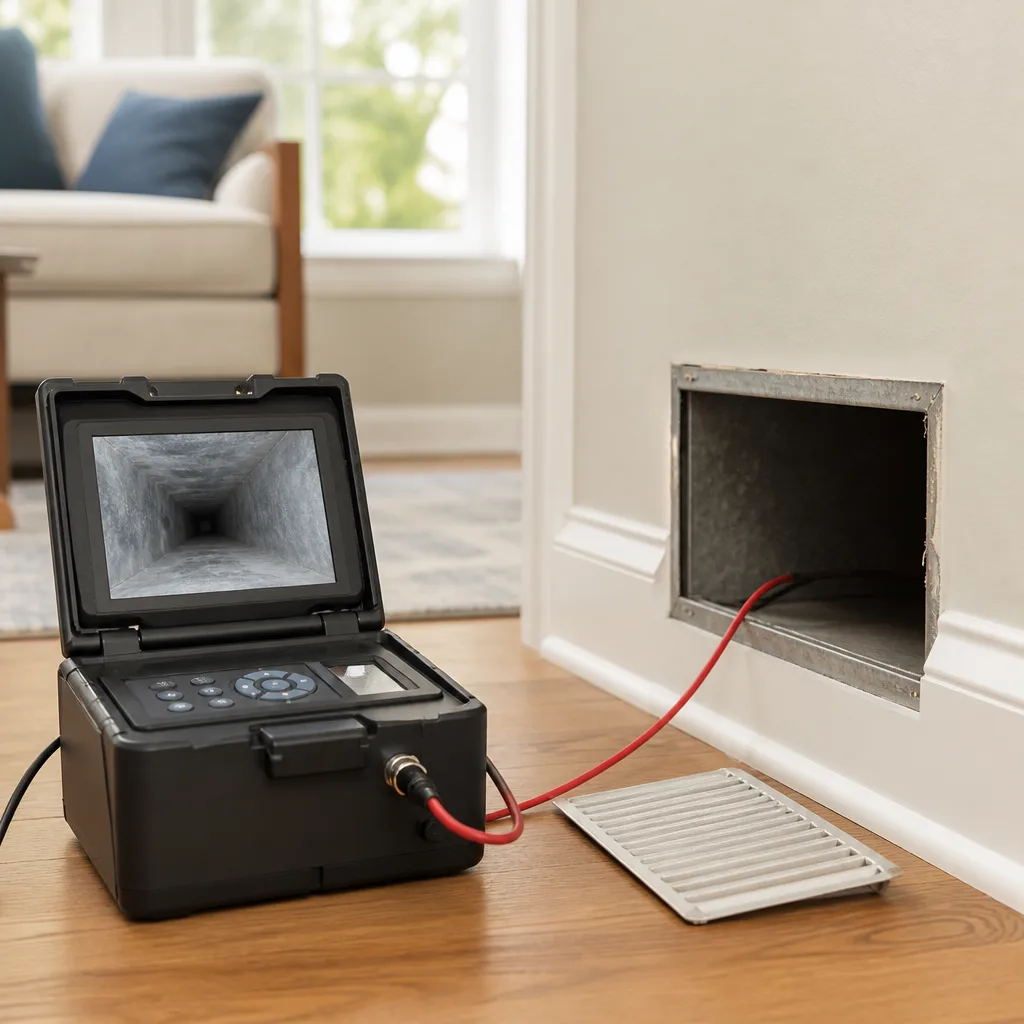 Camera inspection
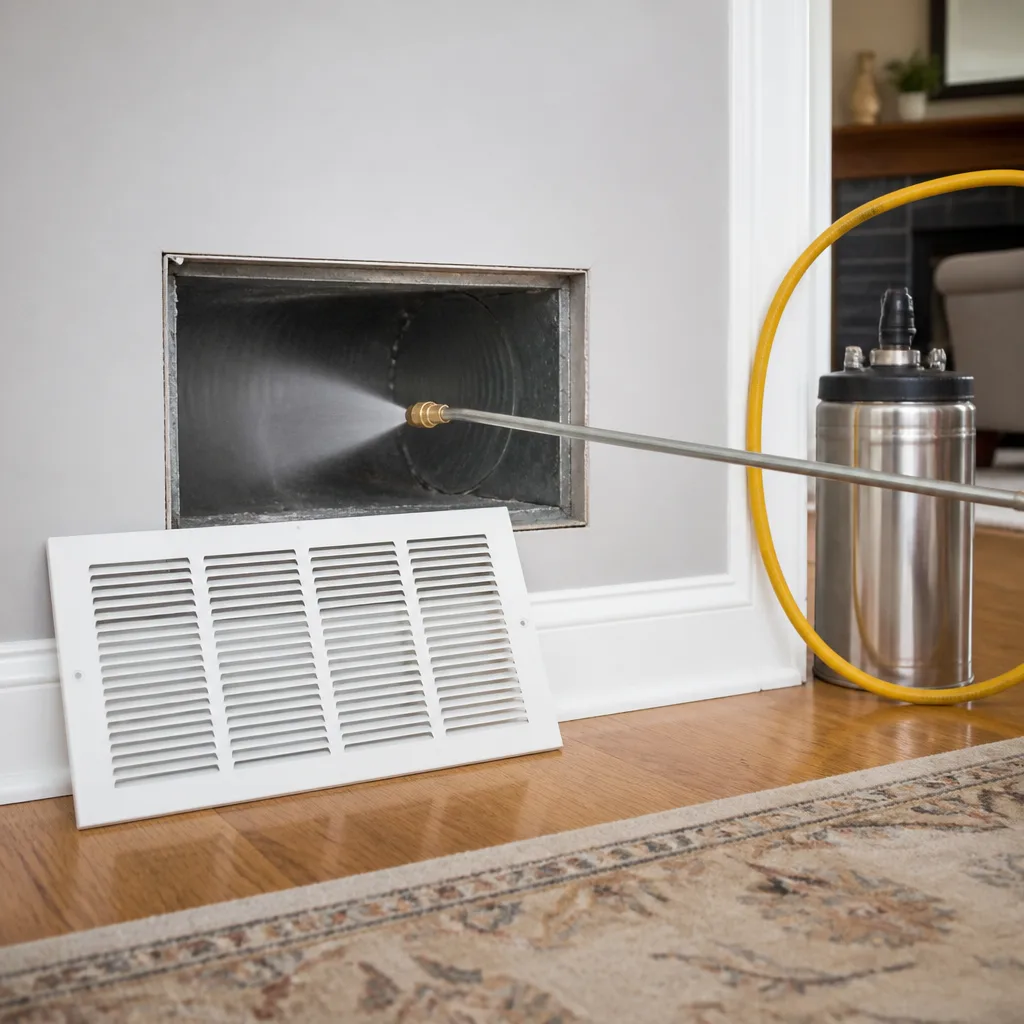 Sanitizing & deodorizing
Whole-system duct and dryer vent check with before-and-after photos - you see exactly what came out of your vents
That "$99 whole-house special" is a bait ad - the real number appears once they are in your hallway, or the "clean" is a shop-vac at the register. We photograph the inside of your ducts before and after instead.
Seasonal Air Duct Cleaning Care for Alpharetta: Year-Round Homeowner’s Guide
Most duct cleaning companies tell you to clean your ducts every three to five years and leave it at that. They rarely mention when in that window matters more than the window itself. Here’s the counterintuitive part: a duct cleaning performed two months before Alpharetta’s pollen peak can leave your system loaded with spring pollen by June, while the same cleaning timed for late May can keep your air measurably cleaner through the entire summer. This guide maps each Alpharetta season to the specific contaminant it pushes into residential ductwork, and gives you a practical calendar for timing our Air Duct Cleaning services so you’re not paying twice for the same result.
Quick Answer
The optimal window for air duct cleaning in Alpharetta is late May through early June, after the spring pollen peak has passed but before summer humidity drives microbial growth. A second, lighter service window exists in late September, after fall renovation dust settles but before heating season begins. Cleaning during these windows removes the maximum contaminant load at the lowest risk of rapid recontamination.
Styles & brands we work with
Table of Contents
- Spring in Alpharetta: The Pollen Load Problem
- Summer Humidity and Microbial Pressure
- Fall Renovation Dust: Alpharetta’s Hidden Contaminant
- Winter Heating Season: Recirculating What Settled
- The Optimal Cleaning Window for Alpharetta (And Why)
- Seasonal Maintenance You Can Do Yourself
- How Professional Duct Cleaning Actually Works
- Filter Strategy by Season
Spring in Alpharetta: The Pollen Load Problem
Alpharetta sits in a region where tree pollen counts routinely exceed 1,000 grains per cubic meter from late March through early May. Pine, oak, and hickory pollen are the primary offenders, and they’re not just an outdoor nuisance. Your HVAC system pulls outside air through fresh-air intakes and around door and window seals, then pushes that air through your ductwork every time the blower runs. Over a single spring season, a typical Alpharetta home can pull pounds of fine pollen through the return side of the system.
What most homeowners don’t realize is that pollen doesn’t simply pass through. Duct interiors are slightly warm, slightly textured, and often lined with a film of household dust that gives pollen something to adhere to. By late May, the duct system in an Alpharetta home that hasn’t been cleaned in three or more years is often carrying a visible coating of yellow-green particulate. We see this regularly: return plenums and first-run trunk lines coated with material that a blower door test won’t show you, but a camera will.
Here’s the key point about spring timing. If you clean your ducts in February or March, before the pollen peak, you’ll have clean ducts for approximately three weeks before the system starts loading again. By the time June arrives, the ducts are carrying the same spring load they would have carried anyway. That’s why the late-May cleaning window matters: it removes the full spring deposit in one pass, leaving the system clean for the low-pollen summer months.
What Spring Pushes Into Alpharetta Ductwork
- Tree pollen (pine, oak, hickory) from March through mid-May
- Grass pollen from late April through June
- Construction dust from spring renovation projects across Alpharetta, Milton, and Roswell
- Drywall and paint particulate stirred up by spring real estate turnover
Spring is also when Alpharetta homeowners open windows for the first time in months. That’s good for fresh air, but it bypasses your return filter entirely. Air that enters through an open window goes straight into the living space, and the HVAC system still pulls from the returns and pushes through the ducts. The pollen that settles on floors and furniture eventually makes its way into the return grilles anyway, drawn in by the blower motor’s negative pressure on the return side.
Summer Humidity and Microbial Pressure
Alpharetta summers are humid. From June through August, outdoor dew points regularly sit in the upper 60s and low 70s, which means outside air holds a large amount of water vapor. When that air enters your duct system, it encounters the cool surfaces of supply runs and plenums after the AC coil. If the ducts are carrying any organic matter, pollen, skin cells, or pet dander, that humid, dark environment becomes a potential breeding ground for microbial growth.
We’re not saying every humid summer grows mold in every duct system. What we’re saying is that the conditions for it exist, and the best preventive step is removing the organic food source before the humidity arrives. A duct system cleaned in late May has no accumulated pollen or dust to support growth. A duct system cleaned in March may have a fresh spring deposit by June, giving microbes exactly what they need.
Humidity control itself is a homeowner-level task, not something that requires a contractor. We tell Alpharetta clients to target indoor relative humidity between 40% and 55% during summer months. A basic hygrometer from a hardware store, placed near the return grille, gives you a live reading. If humidity consistently exceeds 55%, a whole-house dehumidifier or a properly sized AC system with a variable-speed blower is worth considering. The duct cleaning piece is simpler: remove the contaminant, and the humidity has nothing to work with.
Summer Monitoring Checklist
- Place a hygrometer near your return grille and check it once a week from June through August.
- If relative humidity exceeds 55% for two consecutive weeks, address the source: AC coil condition, ventilation, or a dehumidifier.
- Inspect supply registers for visible dust or discoloration, which indicates material being pushed out of the ducts.
- Replace your return filter at the start of summer, not at the end. A heavily loaded spring filter restricts airflow and increases runtime, pulling more humid air through the system.
- If you notice a persistent musty odor only when the blower runs, note it. That’s a microbial signal, not a stale-filter signal.
Fall Renovation Dust: Alpharetta’s Hidden Contaminant
Alpharetta’s real estate market doesn’t slow down much in the fall. Homes change hands, new owners paint, floors get refinished, and drywall work happens before the holidays. Every one of those activities generates fine particulate that finds its way into the duct system even when the HVAC is off at the time, because dust settles into registers and gets pulled in during the next blower cycle.
Renovation dust is different from household dust. Household dust is mostly skin cells, fabric fibers, and tracked-in soil, all relatively light and easily dislodged. Renovation dust is finer and heavier: drywall sanding dust, paint overspray, flooring adhesive particulate, and fine sawdust from trim work. These materials are more likely to embed in the duct lining and require mechanical agitation, such as a rotary brush system, rather than air pressure alone to remove. This is relevant for Alpharetta homeowners because a significant share of the local housing stock was built between 1995 and 2010, and many of those homes are hitting renovation age at the same time.
A homeowner who buys an Alpharetta home in September and immediately schedules duct cleaning in October is making a smart call. The previous owner’s dust load, plus any renovation dust, can be removed in one pass before the heating season starts. A homeowner who buys in September and waits until the following spring gives the system an entire winter to bake renovation dust onto the duct surfaces through repeated heating cycles.
What Renovation Dust Demands
- Mechanical agitation, not just negative-air extraction. A rotary brush system physically dislodges embedded drywall dust.
- Attention to the return side, where renovation dust tends to collect first because returns pull from floor level.
- Post-cleaning filter replacement. The first few heating cycles after renovation work can release whatever wasn’t captured during cleaning.
- Register cleaning. Renovation work leaves dust on and around supply registers, and a proper cleaning includes them.
Winter Heating Season: Recirculating What Settled
Here’s a scenario specific to Alpharetta’s climate that most national duct cleaning guides miss. Alpharetta gas furnaces sit idle for eight or more months of the year. From roughly April through October, the furnace itself isn’t running, but the blower still cycles for AC during summer. Then in November, the first cold snap arrives, and the furnace fires for the first time in months.
What happens next is predictable. Everything that settled in the duct system over the previous eight months, summer dust, fall renovation particulate, pet dander from the indoor-heavy months, gets pushed out of the supply registers and into the living space during the first several heating cycles. Homeowners notice it as a burning smell the first time the furnace runs, which is often just dust burning off the heat exchanger. But that dust also means the system is actively recirculating whatever accumulated all year.
The fix is straightforward. If the ducts were cleaned in late May per the primary window recommendation, the winter particulate load is already low. If they weren’t, a fall cleaning in September or October removes the accumulation before the furnace has a chance to push it through the house. This is the second service window in Alpharetta, and it’s primarily for homeowners who missed the spring window or who did renovation work during the fall.
Heating Season Pre-Start Steps
- Replace the return filter before the first sustained cold week of November.
- Walk through each room and wipe supply registers with a damp cloth. This removes surface dust that otherwise gets pushed into the room on the first blower cycle.
- Run the blower on “fan only” for 15-20 minutes before the first heating cycle. This pushes air through the ducts without the furnace heat, giving loose particulate a gentler exit path.
- If you smell dust burning for more than one or two cycles, or if any register shows visible dust accumulation, that’s a signal the duct system itself is carrying a load. Schedule a professional cleaning.
The Optimal Cleaning Window for Alpharetta (And Why)
Let’s put a specific date range on this. The optimal window for air duct cleaning in Alpharetta is between May 20 and June 15. Here’s the reasoning, step by step.
By May 20, Alpharetta’s tree pollen peak has passed. The pine and oak pollen that dominates April and early May has largely settled, and what’s going to enter your duct system from the spring bloom has already entered it. Cleaning before May 20 means you’re cleaning last year’s load while this year’s load is still entering. Cleaning after mid-June means you’re in peak humidity season, and while cleaning is still beneficial, the system is now exposed to humid air immediately after cleaning, which shortens the clean window.
The secondary window is September 15 through October 15. This serves two groups: homeowners who missed the spring window, and homeowners who did renovation work during the summer or early fall. Alpharetta’s fall real estate activity, homes listed, sold, painted, and floored, generates dust that lands in duct systems by late September. Cleaning in this window removes that load before heating season begins.
What about winter and summer cleaning? Both are possible and sometimes necessary. Summer cleaning addresses humidity-related issues that are already active. Winter cleaning removes heating-season particulate that’s actively recirculating. But neither is the efficient, preventive time. The spring and fall windows prevent the problem; the other seasons react to it.
Why Timing Matters More Than Frequency
- A duct system cleaned at the right time can stay demonstrably cleaner for two to three years than one cleaned at the wrong time.
- Alpharetta’s pollen season is concentrated. The annual contaminant spike happens in a six-to-eight-week period. Cleaning outside that period means you’re either too early or too late.
- Humidity is a multiplier. A clean duct system in humid conditions performs acceptably. A dirty duct system in humid conditions fosters microbial growth. Timing dictates which one you have.
Seasonal Maintenance You Can Do Yourself
Not everything requires a contractor. Here’s what an Alpharetta homeowner can do in each season that costs little or nothing and keeps the duct system in better condition between professional cleanings, and check our Air Duct Cleaning Maintenance Checklist for Alpharetta Homeowners for a complete seasonal routine.
Spring (March – May)
- Replace your return filter with a MERV 8 or MERV 11 filter before pollen season starts. A MERV 11 filter captures more pollen but restricts airflow slightly; a MERV 8 is the balance point for most systems.
- Wipe supply registers with a damp cloth every two weeks during April and May. This captures pollen before it gets pulled into the return side.
- Keep windows closed during peak pollen days, even if the weather is pleasant. An open window is an unfiltered intake.
Summer (June – August)
- Monitor indoor humidity. Target 40-55%. If you’re consistently above 55%, address it.
- Run the blower on “fan only” for 15 minutes each morning. This cycles air through the ducts without the AC coil, which can help dry out residual moisture.
- Check the condensate drain line. A clogged drain line means water backs up into the system, and that water becomes a duct-adjacent humidity source.
Fall (September – November)
- Replace the return filter in early September. The summer filter is loaded; the fall renovation dust is about to add to it.
- If you did painting, flooring, or drywall work, wipe all supply registers and return grilles once the work is done. Then run the blower on fan-only for 30 minutes to flush loose particles.
- Walk through the house with a flashlight and look into each supply register. If you see visible dust accumulation inside the boot, that’s a sign the ducts are carrying a load.
Winter (December – February)
- Replace the return filter in early December, even if you replaced it in September. The fall renovation season in Alpharetta loads filters faster than any other season.
- Vacuum return grilles weekly during heating season. Returns pull floor-level dust, and the blower pushes it through the ducts.
- Notice any register that consistently shows dark streaks or dust accumulation. That’s often a sign of leakage in that specific run, pulling attic or crawlspace air into the conditioned space.
How Professional Duct Cleaning Actually Works
When we clean ducts in Alpharetta, we’re not running a shop vacuum through the registers. The process, properly done, uses commercial equipment and takes three to five hours for a typical single-family home. Here’s what happens, in order, so you know what to expect before anyone arrives.
- System inspection. We map the duct layout, check for visible damage, and confirm the number of supply and return runs. We look at the blower compartment, the coil, and the return plenum.
- Access and containment. We cut or open access points at the supply plenum and return plenum. Supply registers are sealed to prevent dust from escaping into the rooms during agitation.
- Agitation (rotary brush). A rotary brush system, like the Rotobrush equipment we use, runs through each duct run to mechanically dislodge debris that’s adhered to the duct walls. This is the step that separates real cleaning from an air-only pass. Air pressure alone doesn’t remove pollen that’s stuck to the duct lining.
- Negative-air extraction. A Nikro negative-air machine connects to the plenum and pulls air through the system continuously during agitation. The negative pressure captures loosened debris and draws it out of the system, rather than pushing it into the living space.
- Supply run cleaning. Each supply run is brushed and extracted individually, working from the farthest register back toward the plenum.
- Return side cleaning. The return side gets the same treatment. This matters in Alpharetta homes because returns pull from floor level and carry the heaviest load.
- Filter replacement or installation. We install a clean filter, typically MERV 8 or higher depending on the system, before the final walkthrough.
- Register reinstallation and cleanup. We put everything back, wipe down the registers, and leave the site clean. That’s part of The Garrison Code we work under, along with arriving inside the quoted window and pricing in writing before any work starts.
One thing to know: the negative-air method is the industry standard, but it only works correctly if the operator maintains negative pressure throughout the agitation step. If the pressure differential isn’t maintained, loosened debris can escape into the living space. That’s an operational detail, but it’s the kind of thing that separates a $99-per-vent job from a proper system cleaning.
Filter Strategy by Season
Filter selection isn’t a set-it-and-forget-it decision in Alpharetta. The filter that works in January may not be the right filter for April, and the right filter for a home with two dogs is different from the right filter for a home with no pets. Here’s a practical seasonal strategy.
| Season | Recommended Filter | Replacement Cadence | Reasoning |
|---|---|---|---|
| Spring (Mar-May) | MERV 11 | Every 30-45 days | Captures pollen at the highest airborne concentrations of the year |
| Summer (Jun-Aug) | MERV 8 | Every 60 days | Balances filtration with airflow during peak AC runtime |
| Fall (Sep-Nov) | MERV 11 | Every 30 days | Renovation dust and leaf particulate load filters fastest |
| Winter (Dec-Feb) | MERV 8 to MERV 11 | Every 60-90 days | Lower outdoor particulate; indoor pet dander becomes the primary load |
Filtration brands like Honeywell and Aprilaire make filters in these MERV ratings, and they’re widely available in Alpharetta at standard hardware stores. The brand matters less than the rating and the replacement discipline. A MERV 11 filter that’s been in place for four months is worse than a MERV 8 filter replaced on schedule.
One more note: if you have a high-efficiency HVAC system with a variable-speed blower, check the manufacturer’s guidance before moving up in MERV rating. Higher MERV filters restrict airflow, and some variable-speed systems are sensitive to static pressure changes. A MERV 8 filter is the safe default for most Alpharetta homes.
Common Mistakes to Avoid
- Cleaning ducts in March. Alpharetta’s pollen peak runs from late March through mid-May. A March cleaning means the system absorbs the full pollen load within weeks of being cleaned. Late May is the target.
- Assuming the AC filter protects the ducts. The return filter protects the coil and blower, not the duct system itself. Ducts are downstream of the filter on the supply side, and upstream on the return side. Whatever bypasses the filter, through leaks or gaps, lodges in the ducts.
- Skipping the return side. Some low-cost cleaning services clean supply runs only. The return side carries the heaviest contaminant load in most Alpharetta homes because returns pull from floor level. A half-cleaned system is a dirty system.
- Waiting until you see dust blowing from registers. By the time supply registers are visibly pushing dust into rooms, the duct system has been overloaded for months. Visible dust is the symptom, not the start point.
- Assuming a new home has clean ducts. New construction and recent renovation work in Alpharetta leave drywall dust, sawdust, and construction debris in duct systems. A home built in 2023 can have dirtier ducts than a home built in 1998 that’s been properly maintained.
- Trusting a per-vent price without seeing the full scope. The bait-and-switch in this industry is real: a low per-vent price that becomes a much larger invoice once the technician is inside. A legitimate Alpharetta duct cleaning job is priced as a whole system, written down before work starts, and doesn’t move at the door.
See the difference
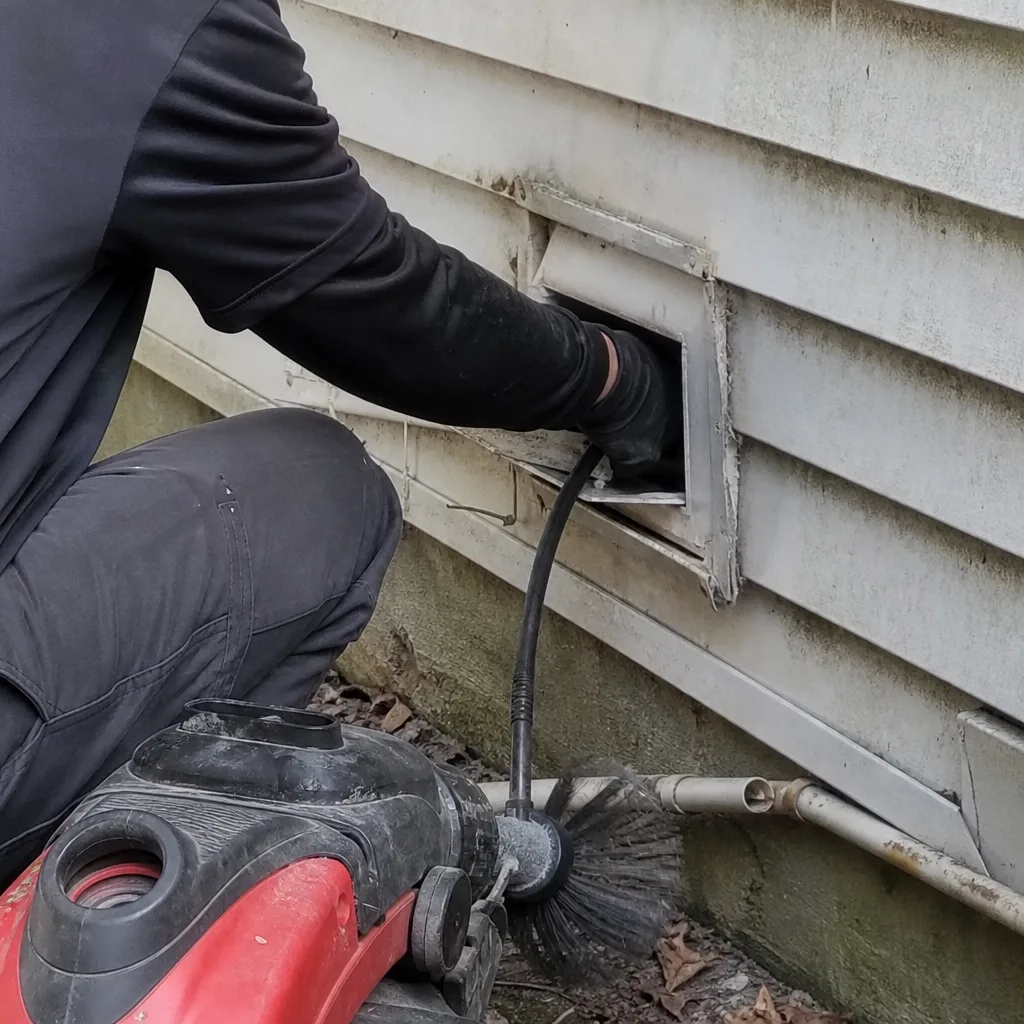 Before
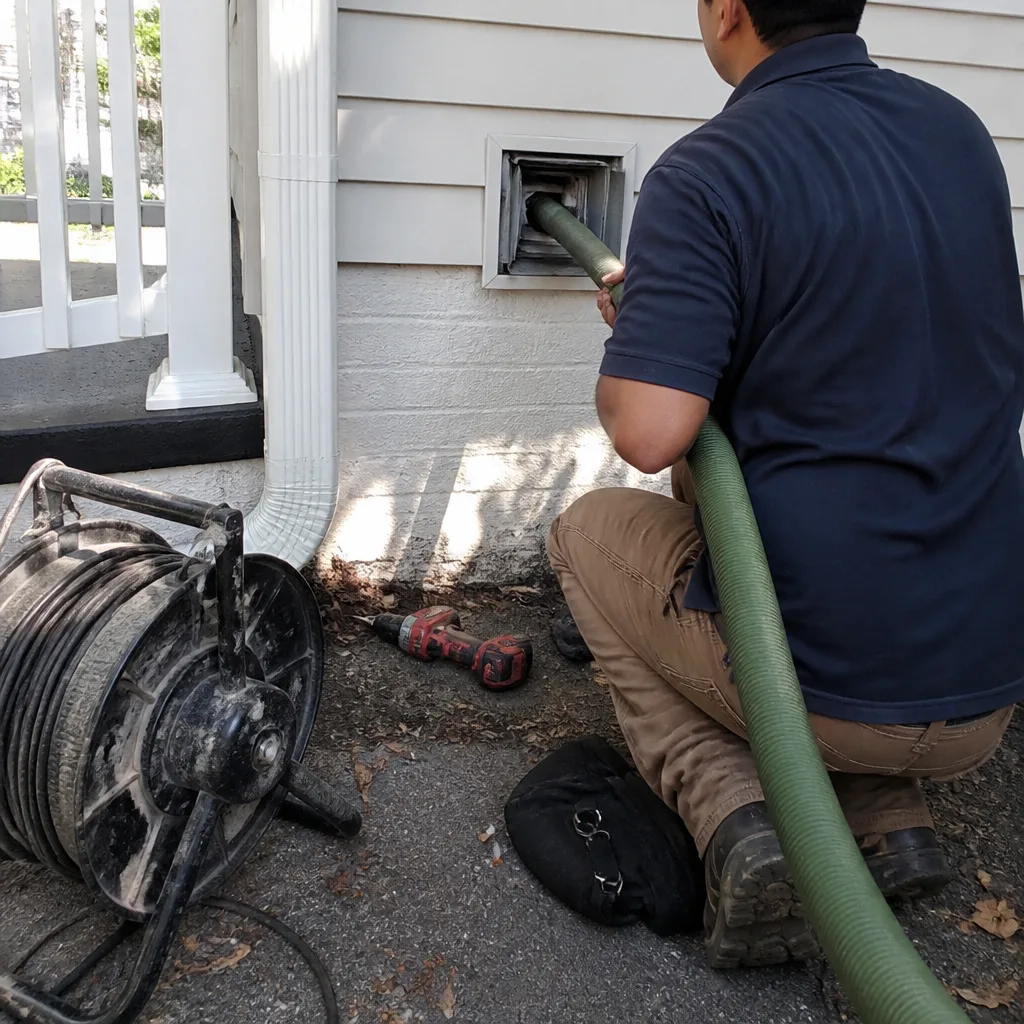 After
After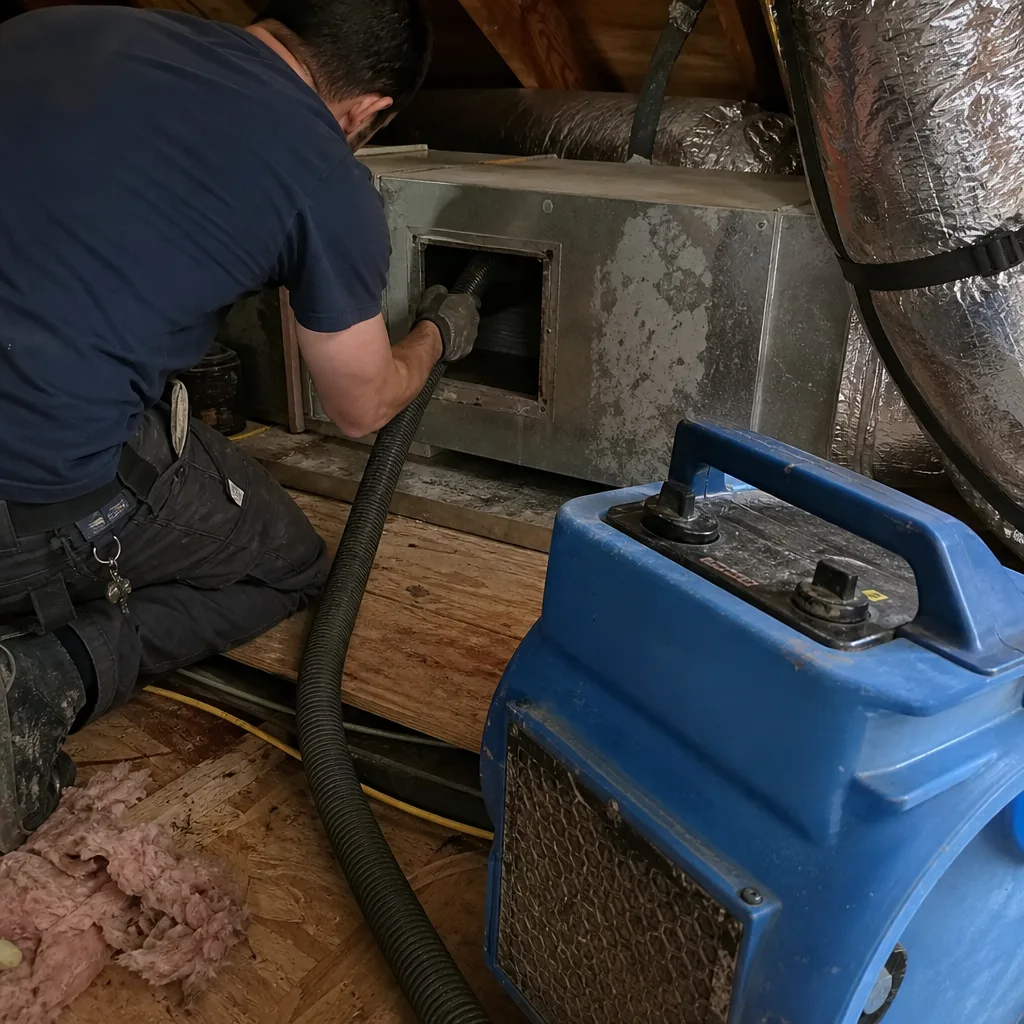 Before
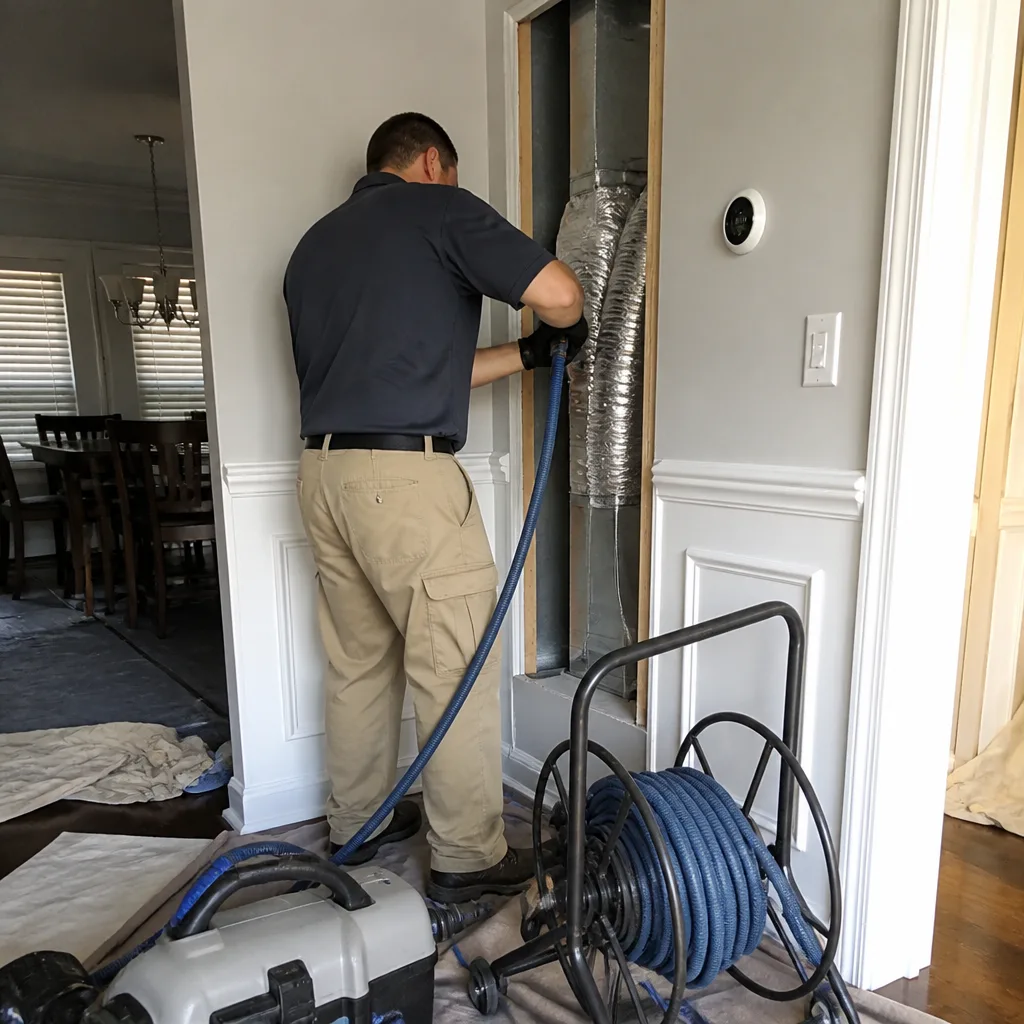 After
After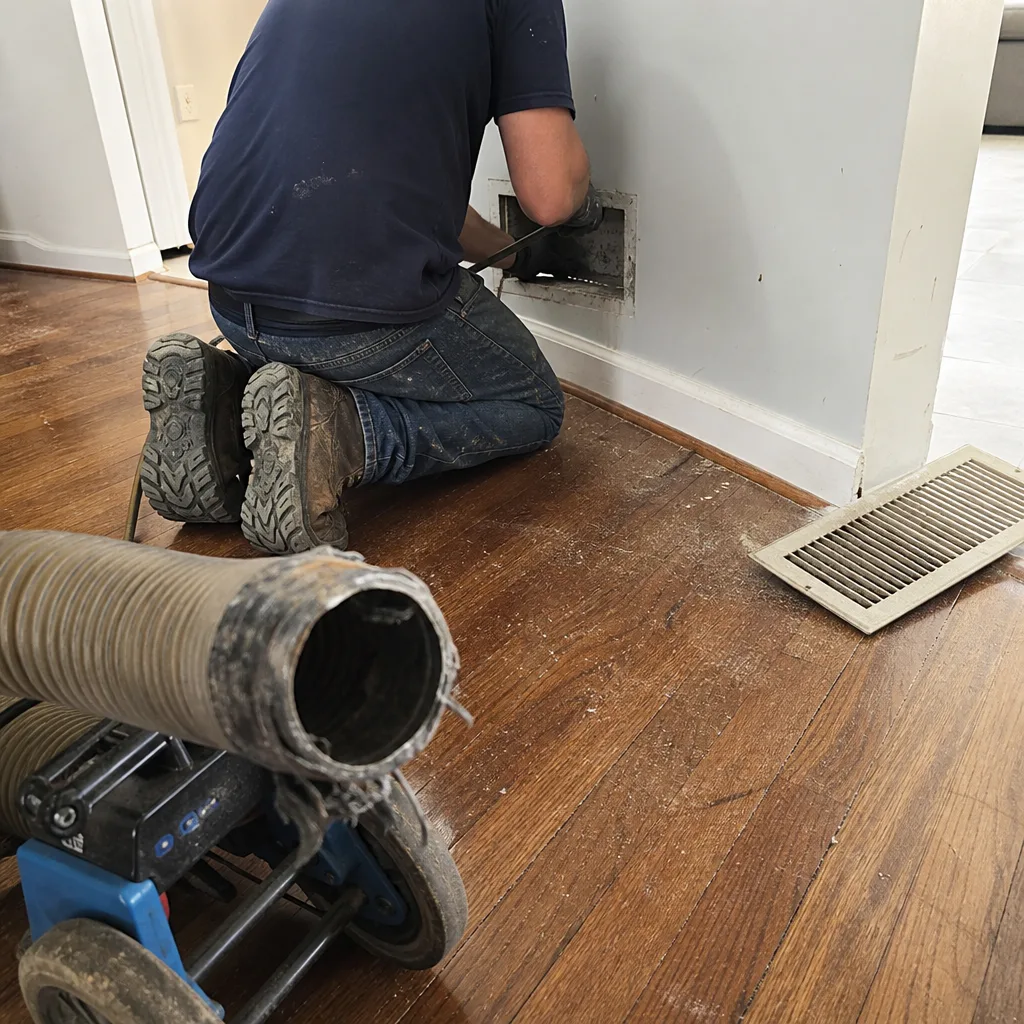 Before
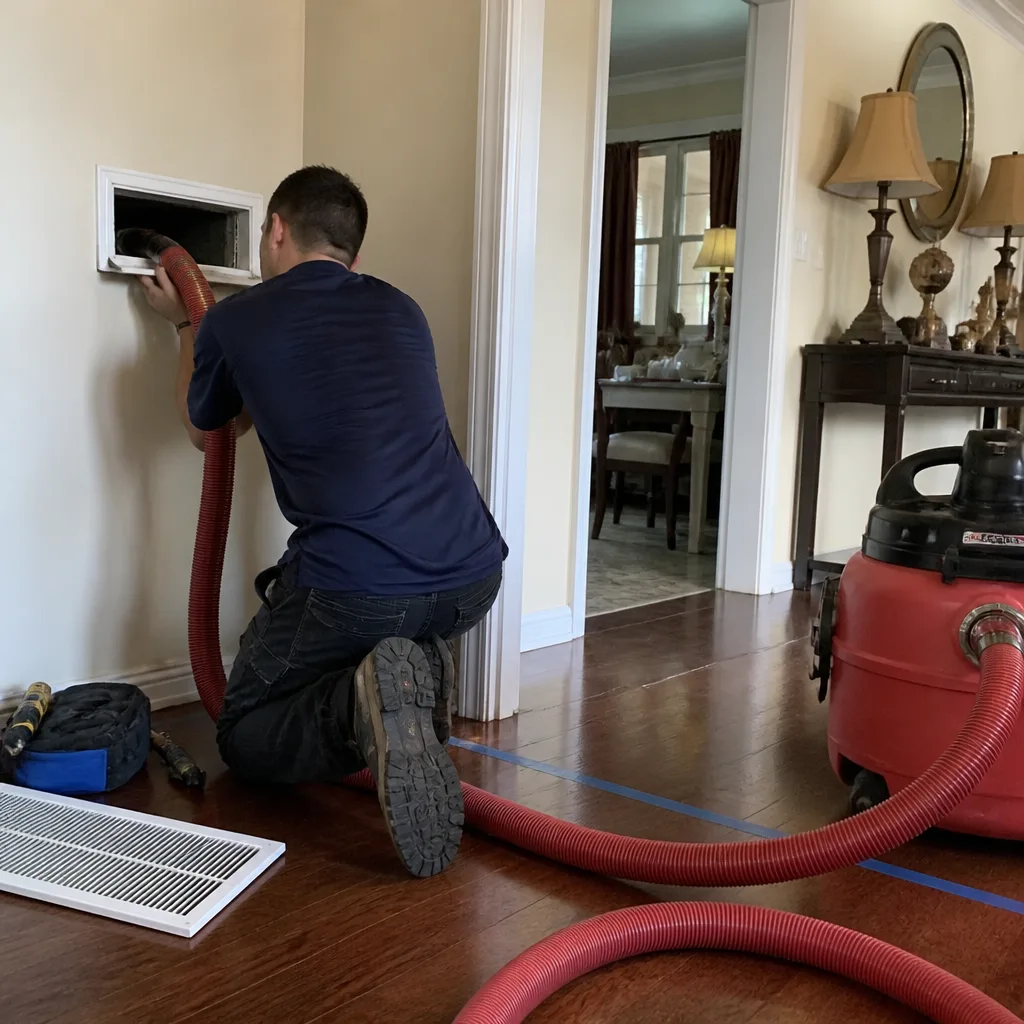 After
AfterWhen to Call a Professional
Some situations call for a professional duct cleaning rather than another season of DIY maintenance. If you’ve lived in your Alpharetta home for more than three years and have never cleaned the ducts, schedule a cleaning during the next optimal window. If you just completed a renovation that involved drywall work, flooring, or painting, schedule within 30 days of project completion. If you notice visible dust accumulation inside supply registers, a musty odor that appears only when the blower runs, or unexplained respiratory irritation that improves when you’re away from home, those are professional-level signals. If you bought a home where the previous owner had pets, the duct system carries that load until it’s professionally cleaned. Hollis Air Duct Alpharetta offers free estimates in Alpharetta, call (762) 769-7145 and we’ll give you a written price for the whole system before any work starts.
Frequently Asked Questions
Air duct cleaning in Alpharetta typically costs between $350 and $750 for a complete single-family home system, depending on the number of supply and return runs, the presence of renovation dust, and whether duct sealing is part of the job; see our Air Duct Cleaning Cost Breakdown: The Alpharetta Homeowner’s Reference for 2026 for a detailed analysis. The price should be quoted as a whole-system figure, written down before work starts, not as a per-vent number that grows once the technician is inside. Call (762) 769-7145 for an exact written quote, estimates are free.
Cheap quotes in this industry usually mean the scope is smaller than the sales pitch suggests, often supply-only cleaning, no return side, no agitation, or a teaser price designed to be upgraded at the door. A legitimate whole-system cleaning with mechanical agitation and negative-air extraction requires commercial equipment, a trained operator, and three to five hours on site, and that work has a real cost. If the price seems too low to cover that, it probably doesn’t. Call (762) 769-7145 and ask for the whole-system price in writing before you commit.
A reputable company shows you before-and-after photos of the duct interior, taken with a camera during the inspection and again after cleaning. You should also see the access points that were cut, the agitation equipment running, and the negative-air machine connected to the plenum. If the crew is in and out in under an hour and no one shows you the interior, the work probably wasn’t done. We photograph every system before and after because our Hollis Air Duct Alpharetta home standard includes proof of work, not just a verbal assurance.
For most Alpharetta homes, every three to five years is the right interval, timed during the late-May or late-September windows described above. Homes with multiple pets, recent renovation work, or residents with respiratory sensitivities may benefit from a two-to-three-year interval. Homes that sit empty for long stretches, which happens in Alpharetta’s real estate turnover, should be cleaned before reoccupancy regardless of the last cleaning date.
Duct cleaning removes the accumulated pollen, dust, and pet dander that recirculates every time the blower runs, which can reduce the airborne particulate load inside the home. It’s not a cure for outdoor allergies, your outdoor exposure doesn’t change, but it reduces the indoor component. For Alpharetta homeowners with spring pollen allergies, the most effective approach is a late-May duct cleaning combined with a MERV 11 filter during pollen season. To learn more about the process, see our full guide on Air Duct Cleaning in Alpharetta.
No, dryer vent cleaning is a separate service that addresses the exhaust run from your dryer to the outside, not the HVAC duct system. The two are often confused because both involve “ducts” and both affect indoor air and fire safety. Dryer vents should be cleaned annually, ideally before the winter months when dryers run more frequently and lint accumulation is a fire risk. See our Dryer Vent Cleaning in Alpharetta page for details.
Duct sealing closes the leaks in your duct system where conditioned air escapes into attics, crawlspaces, and wall cavities. In Alpharetta’s humid climate, those leaks also pull in outside air, which is how humid summer air enters the duct system even when windows are closed. If your energy bills are high, rooms are unevenly heated or cooled, or you see dark streaks around registers, sealing may be part of the solution. A mastic-based seal, applied after cleaning, typically pays for itself through reduced energy loss within a few years. See our Duct Sealing in Alpharetta page for more.
The Bottom Line
Alpharetta’s seasonal rhythms create a predictable contaminant cycle in residential duct systems: pollen in spring, humidity pressure in summer, renovation dust in fall, and recirculated particulate in winter. A homeowner who times duct cleaning to the late-May or late-September windows gets a cleaner system for longer and avoids paying to clean ducts that are about to reload. Between professional cleanings, seasonal filter replacement, humidity monitoring, and register maintenance are the highest-leverage steps an owner can take; explore more guides & resources for year-round duct care strategies. When you’re ready for a whole-system cleaning, the team at Hollis Air Duct Alpharetta will give you a written price before any work starts and back the job with our 365-Day Done Right Promise. Call (762) 769-7145 for a free estimate.
Written by Roy Castellanos, Owner at Hollis Air Duct Alpharetta, serving Alpharetta since 2004.