
Last updated October 15, 2026
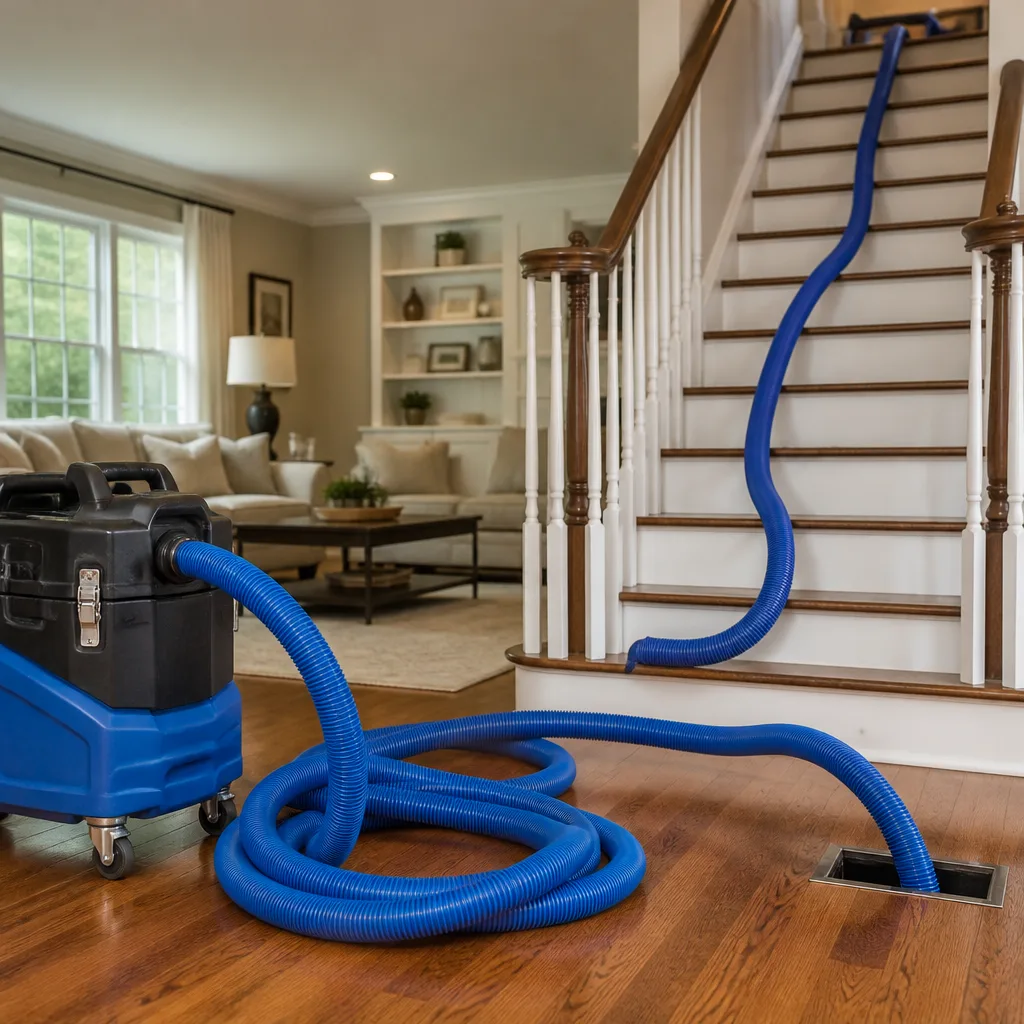 Whole-home duct cleaning
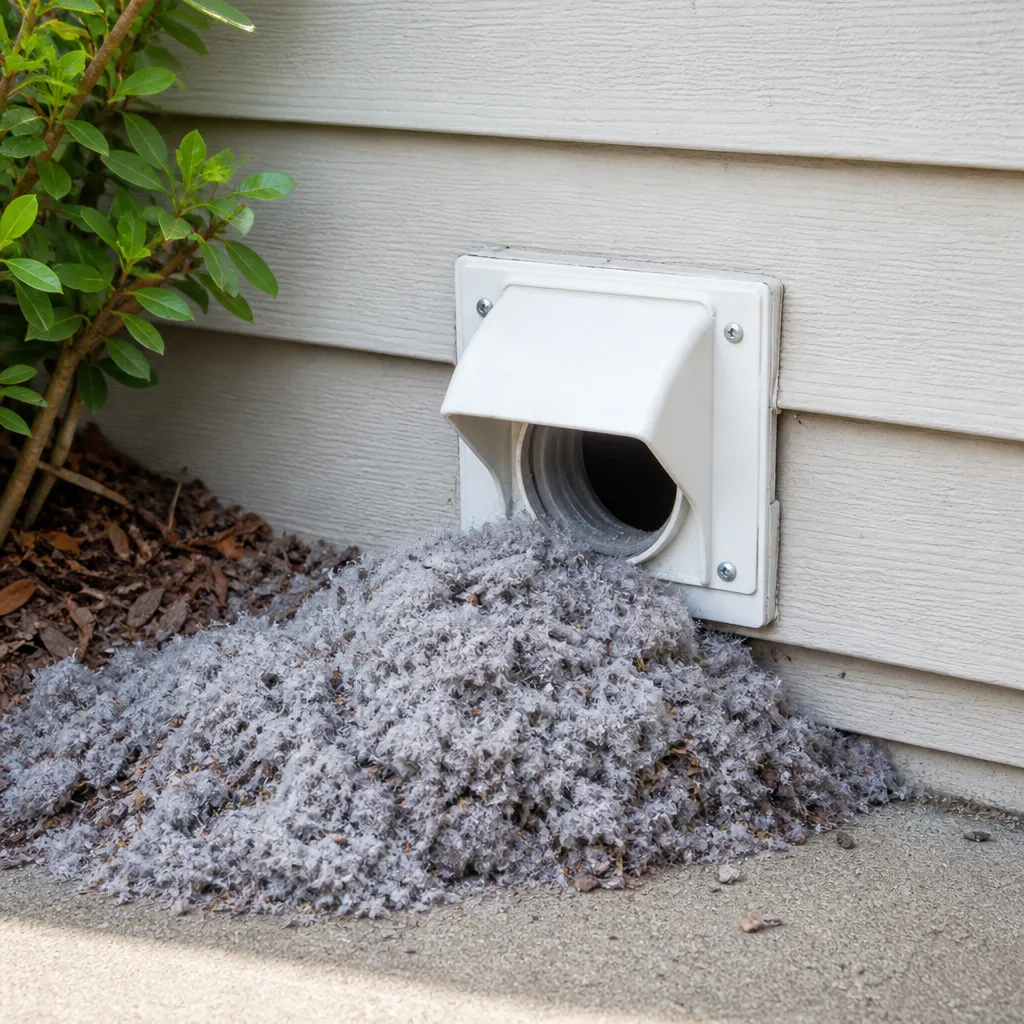 Dryer vent cleaning
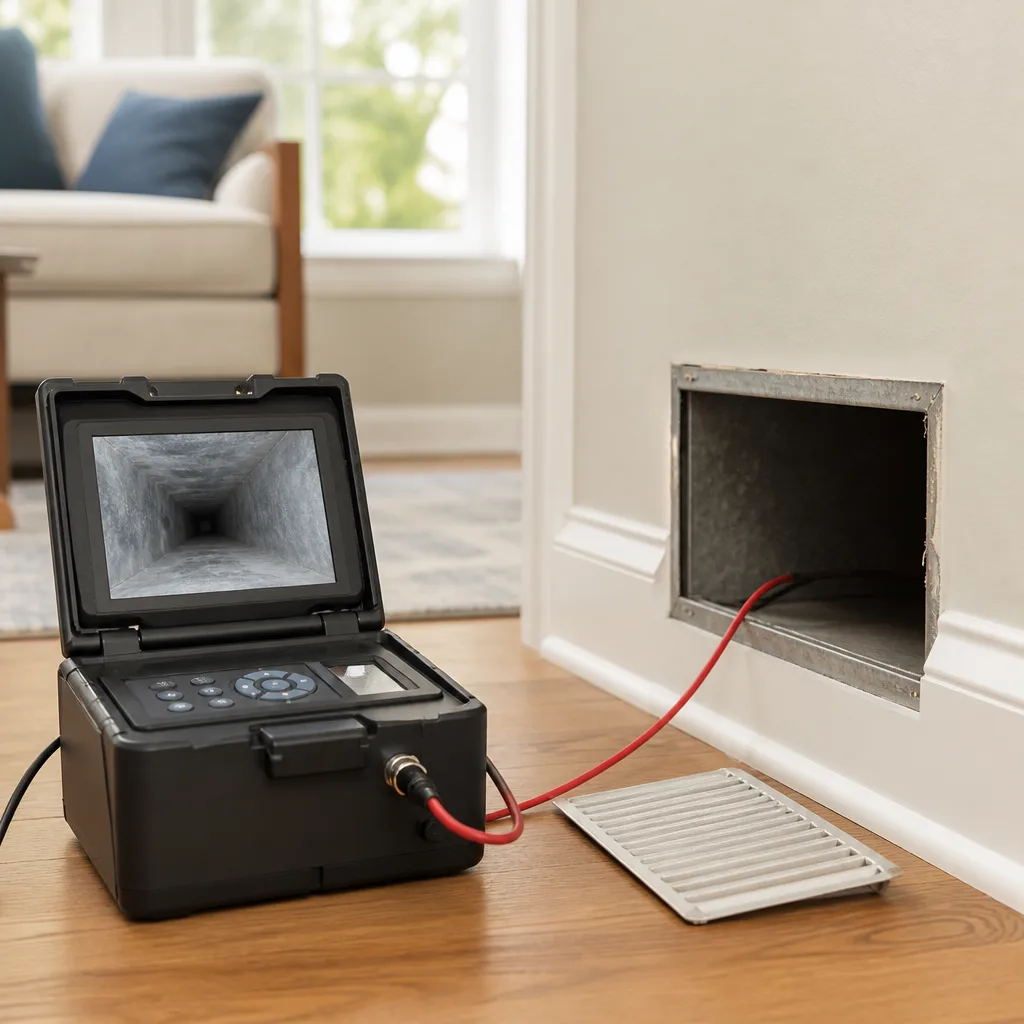 Camera inspection
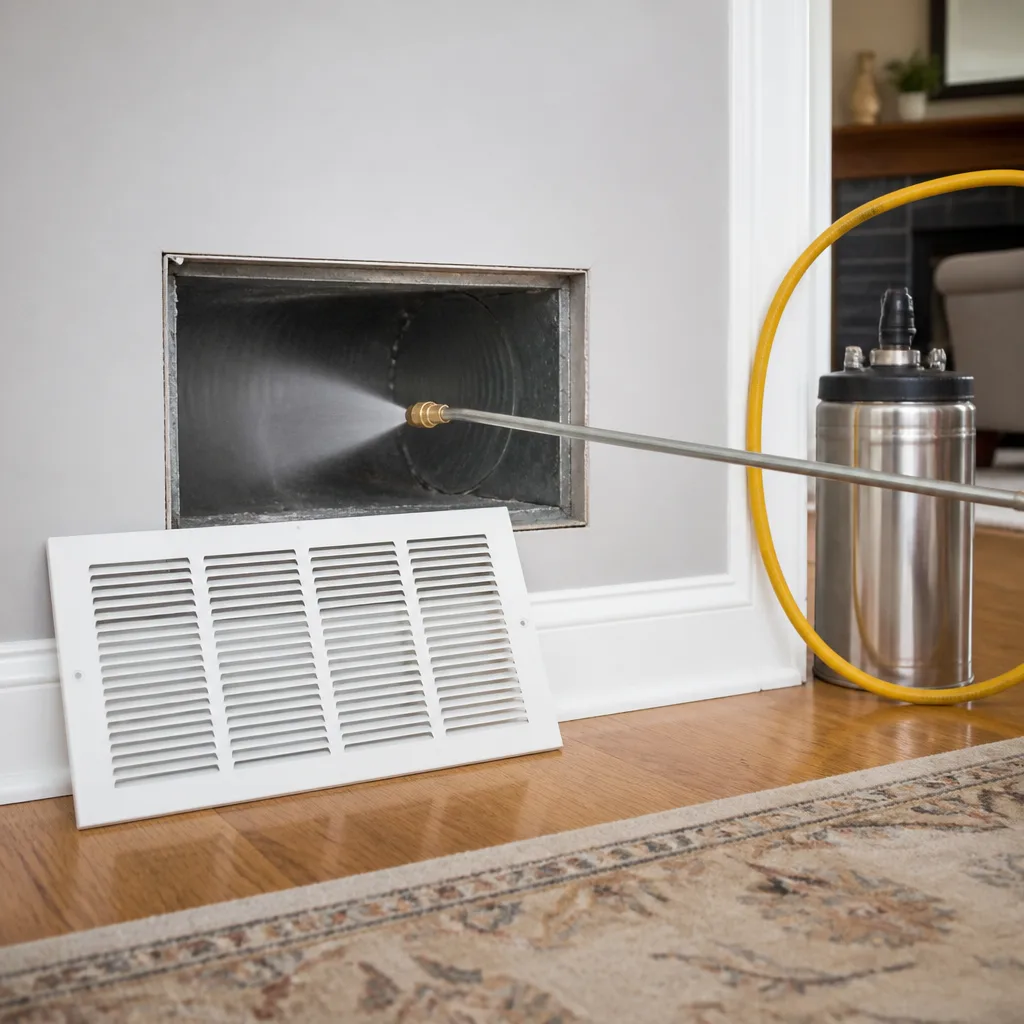 Sanitizing & deodorizing
Whole-system duct and dryer vent check with before-and-after photos - you see exactly what came out of your vents
That "$99 whole-house special" is a bait ad - the real number appears once they are in your hallway, or the "clean" is a shop-vac at the register. We photograph the inside of your ducts before and after instead.
Air Duct Cleaning Maintenance Checklist for Alpharetta Homeowners
Here’s a counterintuitive fact from two decades of working inside Alpharetta ductwork: the single maintenance task most homeowners skip, checking the condition of the flex duct connections at the plenum, is responsible for more re-contamination after a professional cleaning than any other factor in the region’s newer construction. Those connections loosen. They sag. They pull free. And when they do, attic air, insulation particles, and whatever else is up there gets pulled straight into the air stream you breathe. This guide gives you a working maintenance calendar built around specific Alpharetta events that accelerate duct contamination, with actual tasks you can do yourself, honest timelines, and the contractor-level items you should never attempt with a shop vac and good intentions.
Styles & brands we work with
Quick Answer
The air duct cleaning maintenance checklist for Alpharetta homeowners comes down to four homeowner tasks you repeat on a schedule (filter changes, return grille cleaning, register visual checks, and photo documentation), plus four contractor-level items you schedule after specific events (post-renovation cleaning, post-pollen-peak cleaning, flex duct connection inspection, and coil/drain pan service). The schedule is driven by Alpharetta’s specific calendar: spring pollen, summer humidity, fall leaf litter, and winter attic temperature swings that flex duct connections.
Table of Contents
- Why Alpharetta Homes Need a Calendar, Not a Checklist
- Filter Changes: The Homeowner Task That Drives Everything
- Return Grilles and Registers: What to Check and When
- Documenting Duct Condition With Your Phone Camera
- The Alpharetta Event Trigger Calendar
- Contractor-Level Tasks and Honest Timelines
- Three Components Often Excluded From Standard Cleanings
- Common Mistakes to Avoid
- When to Call a Professional
- Frequently Asked Questions
- The Bottom Line
Why Alpharetta Homes Need a Calendar, Not a Checklist
A checklist tells you what to do. A calendar tells you when it actually matters, and in Alpharetta, timing changes everything about duct maintenance. We run into this constantly: a homeowner in Windward keeps their filters changed like clockwork but never realizes their duct contamination spikes every May when the pine pollen blanks the neighborhood. A family off Kimball Bridge Road replaces filters faithfully but doesn’t connect their post-kitchen-renovation dust storm to the drywall sanding that just happened ten feet from their return register. This city’s duct contamination isn’t random. It follows a pattern.
Alpharetta sits in a climate band where four distinct seasonal events push debris into ductwork: a spring pollen season that ranks among the heaviest in the Atlanta metro, summer humidity that feeds microbial growth inside cool duct interiors, fall leaf litter and the dust that comes with it, and winter temperature swings that expand and contract duct joints. On top of that, this region’s housing stock skews newer, with long flex duct runs through hot attics and unconditioned crawl spaces, which means the connections themselves are a maintenance point older duct systems didn’t have to worry about as much.
So the right approach is a maintenance calendar tied to Alpharetta’s year. Here is what that calendar looks like before we get into each item in depth:
- Every 1 to 3 months: filter change or inspection, interval based on household variables we’ll break down below.
- Every 3 months: visual check of return grilles and supply registers, plus a quick wipe of visible dust buildup.
- Twice a year: photo documentation of duct interior condition, timed for May (post-pollen) and November (post-fall).
- After any renovation, any HVAC service, any crawl space/basement moisture event: contractor-level inspection and cleaning evaluation.
- Every 2 to 5 years: full professional air duct cleaning in Alpharetta, depending on household variables.
That’s the skeleton. Now let’s put muscle on it.
Filter Changes: The Homeowner Task That Drives Everything
Your HVAC filter is the first line of defense for everything downstream. When it’s clogged, two things happen: the blower works harder against resistance, and unfiltered air starts bypassing around the filter frame, carrying particulate straight into the supply side of your ductwork. In Alpharetta, we see filter neglect written all over the inside of duct systems, especially in homes along the GA 400 corridor where fine particulate from traffic and construction is a year-round input.
Here’s the filter-change interval guide we give Alpharetta homeowners, based on what’s actually in the household:
- Baseline, no pets, low occupancy: change every 90 days. This works for a couple in a 3,000 square foot home with no animals and mild allergies.
- One dog or one cat: change every 60 days. Pet dander is light and sticky. It clings to filter media and loads it faster than most homeowners expect.
- Two or more pets, or one pet plus allergies in the household: change every 30 days. Dander plus hair plus outdoor pollen tracked in on paws means the filter is working hard.
- Proximity to GA 400 or a construction zone: drop one interval level. If you’re baseline at 90 days, shift to 60. Fine tire and brake dust is invisible until the filter shows it, and by then it’s already been accumulating.
- High occupancy, home daycare, or frequent guests: drop one interval level. More humans means more skin cells, more fabric fibers, more tracked-in debris.
One specific note for Alpharetta: if your home is tighter and newer, which describes a lot of the housing stock built in the last 15 years around Avalon and Crabapple, your filter may actually be working harder than an older, leakier home’s filter, because more of the air passing through the system comes through the return rather than around door gaps. Change it on schedule. The filter is the cheapest, simplest lever in this entire guide.
For most Alpharetta homes, we recommend a MERV 8 to MERV 11 filter as the sweet spot. Going higher than MERV 11 on a standard residential blower can restrict airflow enough to shorten blower motor life, and if the filter frame doesn’t seal well, high-MERV filters just force bypass air around the edges. If you want filtration beyond MERV 11, the right answer is a dedicated media cabinet or an inline filtration product from a manufacturer like Honeywell, not a thicker filter crammed into a 1-inch slot. Hollis Air Duct Alpharetta’s Hollis Air Duct Alpharetta home page has more on how our equipment choices work with residential HVAC systems like yours.
Return Grilles and Registers: What to Check and When
Return grilles are the intake points of your HVAC system. Everything they pull in goes either into the filter or into the ductwork. In Alpharetta homes, return grilles in hallways and open floor plans collect three things in abundance: household dust, pet hair, and a film of sticky residue from cooking, candles, and humidity that makes the first two cling.
Here’s a quarterly homeowner routine that takes about 20 minutes total:
- Visually inspect every return grille. Look for a gray fuzzy coating on the grille fins. If you can wipe it and see solid metal underneath, it’s filterable dust. If the fins look black or greasy, that’s a signal the filter isn’t catching enough, and a sign your ducts may be loading faster than a standard cleaning interval would suggest.
- Vacuum the grille surface with a brush attachment. Do this before you wipe, not after. Dry vacuuming removes the loose layer so you’re not smearing it into the fins with a damp cloth.
- Wipe the grille and surrounding wall area with a damp microfiber cloth. The wall around a return grille often shows a gray halo, that’s the visual proof of air bypass and dust accumulation at the intake point. Wipe six inches beyond the grille edges.
- Remove the grille and check behind it at least once a year. If you see dust caked inside the return duct itself, not just on the grille, the filter isn’t doing its job or there’s a return-side leak pulling unfiltered air from an attic or wall cavity. That’s a contractor-level finding.
- Check supply registers in every room. Look for dark streaks on the wall or ceiling adjacent to supply registers. Those streaks are particulate deposition, and they mean dirty air is exiting the system with enough velocity to stick to surfaces. Mild streaks are normal in Alpharetta during pollen season. Heavy, dark, or persistent streaks mean the duct interior has a contamination load worth investigating.
This is the homeowner-level inspection that tells you whether your ducts are staying clean or silently accumulating. It’s not a substitute for professional cleaning, but it’s the early warning system. And it costs nothing but 20 minutes every quarter.
Documenting Duct Condition With Your Phone Camera
Here’s a practice almost none of our Alpharetta customers do before their first cleaning, and almost all of them wish they had: photograph your duct interiors before anything is done. Not the grilles, the actual interior of the ducts themselves. You can do this with any modern smartphone.
Why it matters:
- It gives you a baseline. When you know what your ducts look like on May 1, you can compare against November 1 and see whether the pollen season loaded them or whether your filters held the line.
- It makes professional cleaning verifiable. A company that shows before-and-after photos of the work should be able to prove their result. If you’ve already got your own “before” photos, you can verify their “after” claim independently. We use a negative-air method with professional equipment from manufacturers like Nikro and Rotobrush, and we show our customers the before-and-after, but even if we didn’t, your own records are the strongest verification tool you have.
- It catches slow-growing problems. A hairline damp stain inside a duct in April might be a visible mold bloom by August. Photos at intervals make that change obvious.
- Remove a supply register in a central hallway or main living area. Pick the same register every time so comparisons are apples-to-apples.
- Stick your phone camera just inside the opening and take a photo with the flash on. Aim down the duct run, not at the register boot itself.
- Do this at two points: one near the air handler or furnace, one at the farthest supply register from the unit. The farthest register shows the cumulative condition of the entire run.
- Save the photos in a folder named with the date. “Duct interior – May 2026” is enough. You’re building a record, not a photography portfolio.
- Repeat every six months. May and November, aligned with Alpharetta’s two biggest contamination seasons.
- “Does your quote include the dryer vent, or is that a separate service?”
- “Do you open the air handler cabinet and inspect or clean the coil?”
- “Is the drain pan and condensate line part of the job?”
- Changing the filter on a fixed 90-day schedule regardless of household conditions. A two-dog household should not be on the same interval as a no-pet household. Match the interval to the variables above, not the calendar.
- Trusting that a cheap cleaning actually cleaned. Some companies in this trade run a blower through the vents for 20 minutes and call it done. If the crew isn’t using negative-air equipment and rotary brushes, and if they can’t show before-and-after photos, you’ve paid for a blowout, not a cleaning.
- Skipping the coil because it’s “not part of the ducts.” The coil is the dirtiest component in many systems, and cleaning the ducts while leaving the coil loaded is like washing your car but not cleaning the wheels.
- Ignoring return-side leaks in the attic. A disconnected return duct in an Alpharetta attic pulls unfiltered insulation-laden air into the system all day. Homeowners rarely notice because the symptom is just “dusty house,” which they write off as normal. It’s not normal.
- Documenting nothing. If you don’t have a baseline photo before a cleaning, you can’t verify the after. If you don’t have a photo before a moisture event, you can’t prove what the event changed. Five minutes twice a year closes that gap.
- Waiting until symptoms appear to do anything. By the time you see heavy streaks at the registers or smell that musty puff when the AC kicks on, your ducts have been carrying a contamination load for a while. The whole point of this calendar is to act before symptoms, not after.
- Treating dryer vents as an afterthought. The dryer vent is the fastest-loading, highest-risk component on this list. Annually for most Alpharetta households, more often if the vent run is long or the household is big.
How to do it practically:
This practice takes five minutes twice a year. If you ever need to diagnose a problem, make an insurance claim related to moisture or fire damage, or evaluate whether a cleaning was done properly, you’ll have the evidence.
The Alpharetta Event Trigger Calendar
Some duct maintenance isn’t time-based. It’s event-based. In Alpharetta, four specific events reliably accelerate duct contamination, and each one should trigger a specific response. This is the part most generic checklists miss entirely.
1. After any renovation, even a small one
Drywall dust, sawdust, paint overspray, and construction debris don’t just settle on floors. They get pulled into return ducts and distributed through the supply side. This is true for kitchen remodels in the older neighborhoods off Rucker Road, bathroom renovations in Crabapple, and even single-room flooring replacements. The dust is fine enough to stay airborne for hours, and your HVAC system is the biggest air mover in the house.
The trigger: any work involving drywall cutting or sanding, floor removal, or attic insulation work.
The homeowner task: change the filter immediately after the work wraps up, even if it was just changed. Run the fan on “on” mode for 24 hours to push airborne dust through the filter continuously.
The contractor-level decision: if the renovation lasted more than two weeks or involved significant drywall work, schedule a professional air duct cleaning in Alpharetta after the final cleanup, not before. Cleaning before the final punch-out means the ducts just re-load with whatever dust is still airborne.
2. After HVAC system service or replacement
When a technician opens the air handler, services the blower, or replaces an evaporator coil, they’re working inside the same cabinet that feeds your supply ducts. Debris from the old components, accumulated dust in the coil compartment, and biological growth from a coil that’s been wet and warm for years all get disturbed and pushed downstream. This is a major contamination event that almost no one connects to the service visit.
The trigger: any service that opens the air handler cabinet, including coil cleaning, blower replacement, or full system replacement.
The homeowner task: none specifically beyond filter replacement if the filter wasn’t changed during service.
The contractor-level decision: if the coil was visibly dirty or the system is more than five years old, have the supply ducts cleaned as a follow-up within 30 days. If the system was replaced, clean the ducts before the new system is commissioned or immediately after, so the new blower isn’t pushing old contamination through the house.
3. After the spring pollen peak
Alpharetta’s pollen season runs roughly March through May, peaking in April when the pines release their yellow-green clouds. Pollen grains are large enough to be caught by a MERV 8 filter, which is good, but the volume is extraordinary. What gets through, and what sits in the return ductwork waiting to be re-entrained, accumulates quickly.
The trigger: late May or early June, once the pollen counts drop and the yellow film stops reappearing on your car.
The homeowner task: change the filter in early June even if it’s not due yet. The pollen load alone has likely saturated it.
The contractor-level decision: if your ducts haven’t been cleaned in three or more years, schedule the cleaning in June. The pollen season is the single largest annual particulate event in Alpharetta, and ducts that are already carrying a load just added another layer.
4. After any basement or crawl space moisture event
This is the one we want Alpharetta homeowners to take most seriously, because it’s the one where duct contamination turns into something worse. If your crawl space flooded, your basement seeped, or a condensate line backed up and soaked the area around your air handler, the duct connections and the ducts themselves may have been exposed to standing water or water vapor. Wet duct interiors grow biological material. It doesn’t need to be visible to be a problem.
The trigger: any event where water pooled in the crawl space or basement, any plumbing leak that reached the HVAC area, or any condensate drain overflow that soaked into duct insulation or the duct interior.
The homeowner task: dry the area as quickly as possible with fans and dehumidifiers. Document the incident with photos.
The contractor-level decision: have the ducts inspected within 30 days. If the duct interior or the duct insulation got wet, cleaning may not be enough; sections may need replacement or duct sealing in Alpharetta. This is not a “wait and see” situation. Wet duct insulation is a growth medium. Get it assessed.
Contractor-Level Tasks and Honest Timelines
Some duct maintenance is genuinely out of the homeowner’s hands. Not because it’s complicated, but because doing it right requires equipment, access, and a body half-inside a duct run. Here’s the honest list, with timelines, and what each one actually involves.
Full professional cleaning: every 2 to 5 years
The honest interval for a full air duct cleaning in Alpharetta depends on household variables, not some universal “every three years” rule. Homes with two shedding dogs, a resident with allergies, and a location off a heavily traveled corridor might warrant cleaning every 2 years. A two-person household with no pets, tight filters, and clean return grilles might go 5 years between cleanings. The variables that shorten the interval: pets, pollen sensitivity, proximity to GA 400, renovation frequency, and smoking or vaping indoors.
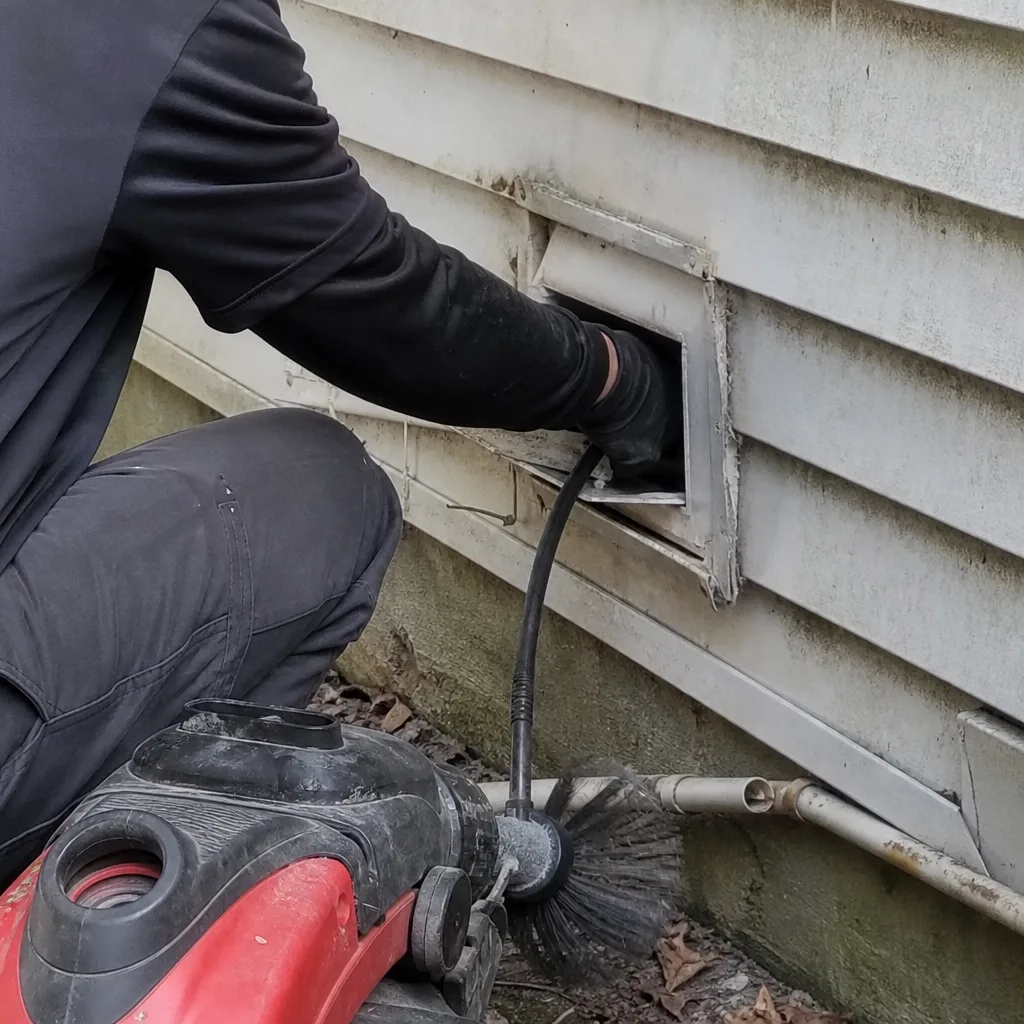
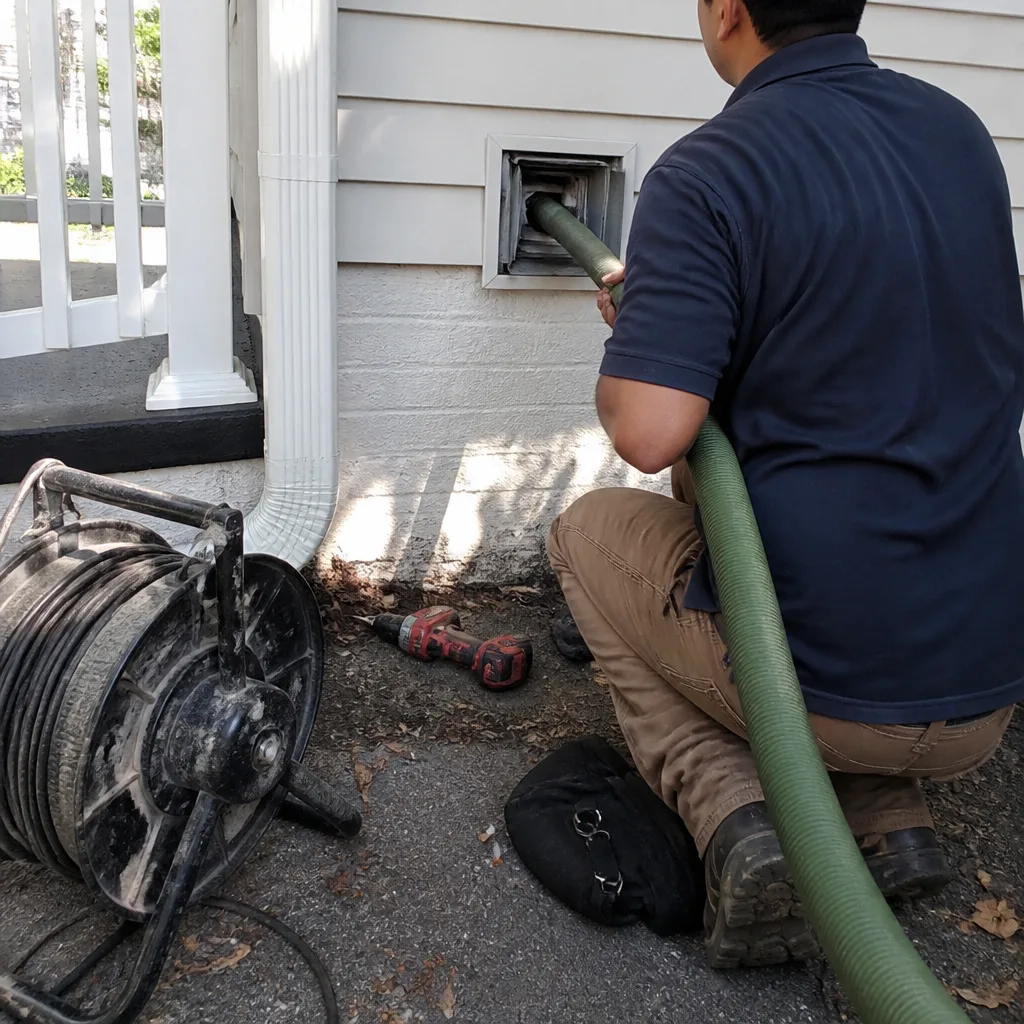
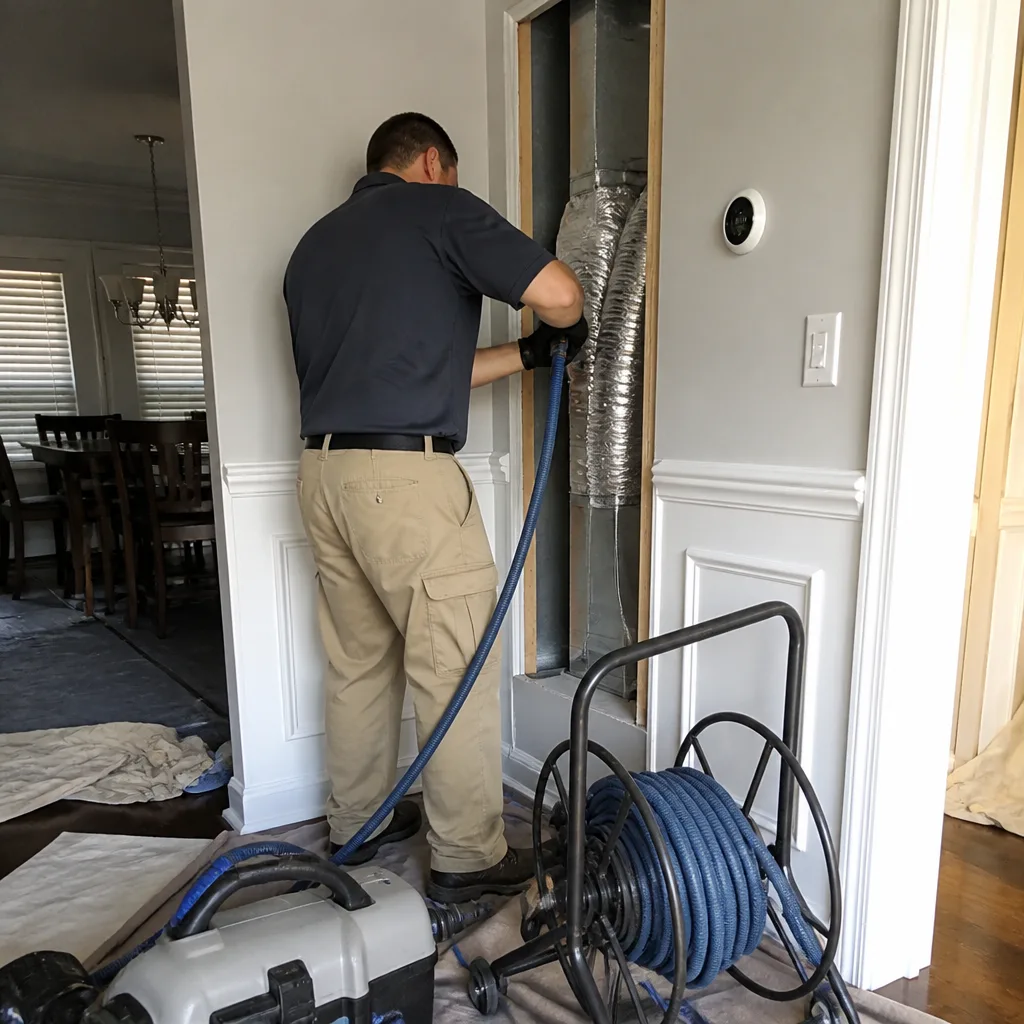
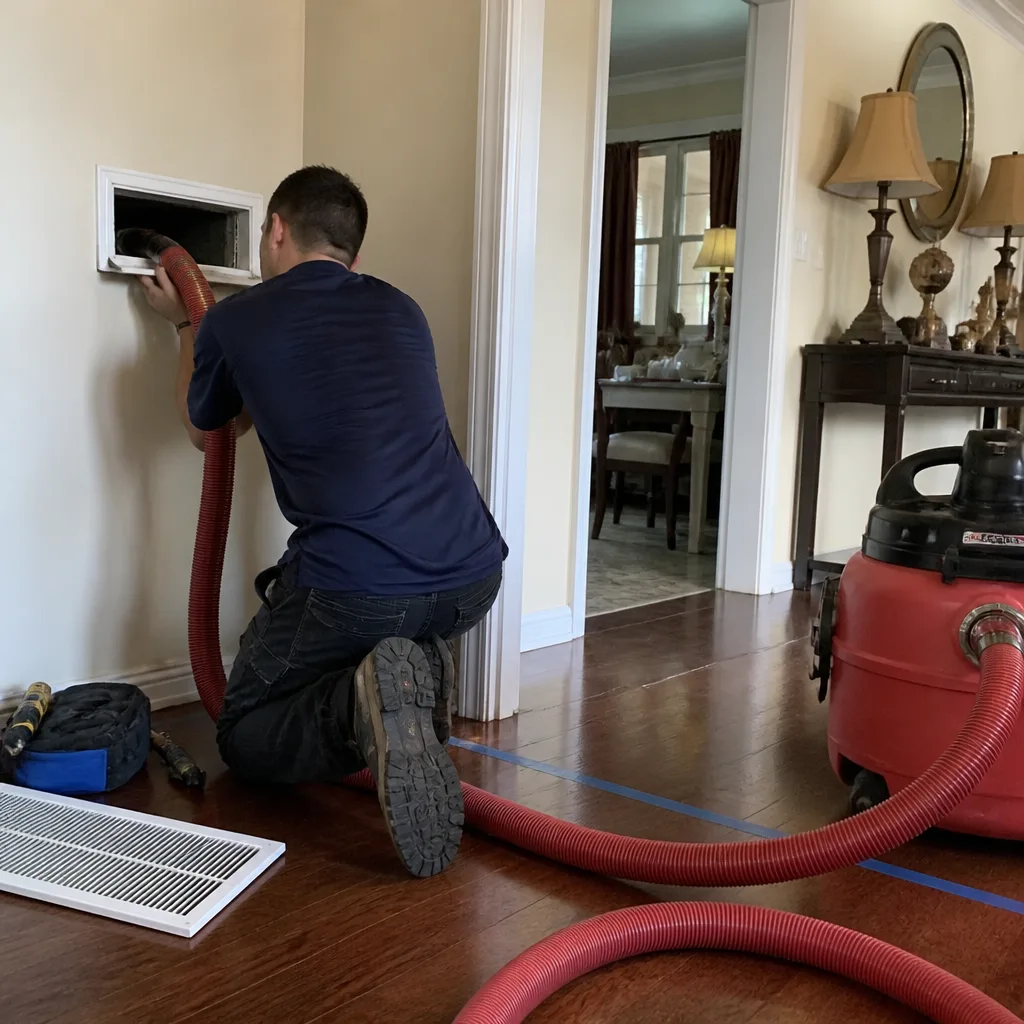
A proper cleaning uses a negative-air machine (what Nikro and Abatement Technologies are known for) to put the system under continuous vacuum while rotary brush systems (like the Rotobrush units we run) physically dislodge debris from the duct walls. The vacuum prevents all that dislodged material from blowing into your living space during the work. This is not a “blow and go” job with a shop vac and a brush on a drill. It takes a professional crew several hours for a typical Alpharetta home.
Flex duct connection inspection: every 3 to 5 years, or after any attic work
This is the task we mentioned at the top, and it deserves its own entry. In Alpharetta’s newer construction, long flex duct runs connect to sheet metal plenums with zip ties or band clamps. Those connections sit in attics that swing from 30 degrees in winter to 130 degrees in summer. Over time, the ties loosen, the clamps slip, and gaps open. When they do, the negative pressure on the return side or positive pressure on the supply side means air is either leaking out of the system or being pulled in from the attic.
The inspection is straightforward: a technician gets into the attic, physically checks every plenum connection and every duct joint, and re-secures or reseals anything loose. We do this as part of our cleaning service, and we recommend it as a standalone inspection after any attic work by other contractors, because insulation crews and cable installers accidentally disturb duct connections all the time.
Coil and drain pan service: every 2 to 3 years, or when airflow seems weak
The evaporator coil sits in the air handler and condenses moisture as part of cooling. That coil is wet during cooling season, which means it’s a dust magnet. When a coil gets heavily loaded, two things happen: airflow drops, and the dust on the wet coil provides a foothold for biological growth. The drain pan below it catches the condensation, and when it’s dirty, the pan holds water longer, which makes the growth problem worse.
This is a contractor-level task because accessing the coil requires opening the air handler cabinet, and cleaning it wrong can bend the fins, damage the coil, or send debris down the drain line. A proper air duct cleaning in Alpharetta should include coil inspection, and cleaning should be recommended if the coil shows significant loading. Not every cleaning company includes this, which brings us to the next section.
Three Components Often Excluded From Standard Cleanings
Here’s where Alpharetta homeowners get caught. You book a duct cleaning, the price sounds fair, the crew shows up, and they clean the supply and return ducts. Then you find out the dryer vent wasn’t touched, the coil compartment was never opened, and the drain pan still has a season’s worth of sludge in it. Those exclusions matter, because each one is a contamination source that can re-load cleaned ducts within months.
1. The dryer vent
Dryer vents aren’t part of your HVAC ductwork, but they’re connected to your home’s air quality and your fire risk. Lint accumulates in the vent line, restricts airflow, makes your dryer run hotter and longer, and eventually creates a fire hazard. In Alpharetta homes where the laundry room is on an exterior wall with a short vent run, this is a modest concern. In homes where the dryer vents through the roof or runs more than 10 feet, lint builds faster than most homeowners realize.
Before you book a cleaning, ask whether the dryer vent cleaning in Alpharetta is included or a separate line item. Some companies bundle it; some don’t touch it. Either way, you need to know what you’re paying for. We offer it as a separate service and recommend it annually for most households, more often for large families or heavy dryer use.
2. The coil compartment
Some cleaning companies clean the ducts but never open the air handler. The coil, blower, and heat exchanger sit there collecting whatever the filter missed, and every time the blower runs, it pushes air across those dirty surfaces into the supply ducts. A cleaning that skips the coil is a partial cleaning. Ask directly: “Does your quote include opening the air handler and cleaning or at least inspecting the coil?” If the answer is vague, the coil probably isn’t on the scope.
3. The drain pan and condensate line
The drain pan under the coil is a shallow tray that catches condensed water. In humid Alpharetta summers, it catches a lot. When it’s dirty, the water hangs around longer, and standing water plus dust plus warmth is exactly the recipe for biological growth. The condensate line is the tube that drains the pan, and when that clogs, the pan overflows, which can soak the area around the air handler and the duct connections below it. A complete cleaning scope should include draining and clearing the pan, and a check of the condensate line for clogs. If it’s not mentioned, ask.
Here’s a straightforward pre-booking question list that solves all three exclusions at once:
Any company that answers all three clearly is being straight with you. Any company that dodges is telling you something useful too.
Common Mistakes to Avoid
When to Call a Professional
Call when the calendar says it’s time, when you’ve seen something you can’t unsee in your duct photos, when a renovation or moisture event has happened, or when the system hasn’t been touched in five years and you don’t have a documented baseline. Call when the return grilles show black streaks that reappear within weeks of cleaning them, when the house stays dusty despite regular filter changes, or when anyone in the home has unexplained respiratory symptoms that worsen in specific rooms or seasons. These are signals, not certainties, but they’re signals worth investigating.
Hollis Air Duct Alpharetta offers free estimates in Alpharetta, with the price written down before any work starts. Call (762) 769-7145.
Frequently Asked Questions
For a typical single-system Alpharetta home, expect to pay between $350 and $700 for a full professional cleaning with negative-air equipment and rotary brush agitation, with the final price depending on square footage, number of supply runs, and whether dryer vent, coil, or drain pan work is included. Beware quotes that come in under $200 for a full system; in this trade, the low teaser price almost always expands once the technician arrives. Call (762) 769-7145 for an exact written quote, estimates are free.
Cheaper quotes usually reflect a narrower scope, typically supply ducts only, no air handler access, no coil work, no dryer vent, and no negative-air containment. The company gets in the door at a low number and upsells the rest once they’re inside. When comparing quotes, compare line items, not total prices.
Ask for before-and-after photos of the duct interior, which any legitimate company using negative-air equipment can provide. Take your own before photos so you can independently verify the after. And watch for the physical evidence: register grilles should be free of fine dust, the air handler cabinet should show fresh cleaning marks if the coil was included, and the smell of old dust should be gone from the system when the blower runs.
Every 2 to 5 years for most Alpharetta homes, adjusted for household variables. Two shedding pets shorten the interval. A no-pet two-person household with MERV 11 filters changed on schedule can push toward 5 years. Smoke indoors, do frequent renovations, or live immediately off GA 400, and the interval shortens to 2 to 3 years.
It can, but the mechanism isn’t what most people assume. Cleaning removes the accumulated layer of dust, pollen husks, and debris that would otherwise keep re-entering the air stream every time the blower cycles. During peak pollen season, the far bigger variable is your filter. A fresh MERV 11 filter catches incoming pollen better than a loaded MERV 8, and a clean coil maintains airflow so the system actually filters the volume moving through it. Cleaning once a year isn’t the answer. A clean system plus an on-schedule filter is.
Duct cleaning removes accumulated debris from the interior surfaces of the ductwork. Duct sealing in Alpharetta closes leaks at the joints and connections so conditioned air stays in the ducts and attic air stays out. They’re complementary services, not substitutes. A clean duct with a gaping connection leak will re-contaminate. A sealed duct with a decade of accumulated dust will still deliver dirty air. Systems in newer Alpharetta homes often need both: sealing because the flex connections have loosened, and cleaning because the leaks already let debris in.
The Bottom Line
The ductwork in your Alpharetta home is a mechanical system, and like any mechanical system, it responds to maintenance. Change your filters on an interval that matches your actual household, not the generic 90-day rule. Check your return grilles and registers quarterly. Photograph your duct interiors twice a year so you’ve got a baseline. React to the specific events that load Alpharetta ducts: renovations, HVAC service, the spring pollen peak, and moisture events in the crawl space or around the air handler. And before you book any cleaning, ask the three questions that determine whether the job is actually complete: dryer vent included, coil opened, drain pan cleared. The checklist isn’t about spending more on maintenance. It’s about knowing which tasks are yours, which are the contractor’s, and when each one actually matters.
Written by Roy Castellanos, Owner at Hollis Air Duct Alpharetta, serving Alpharetta since 2004.
See the difference
 Before
 After
After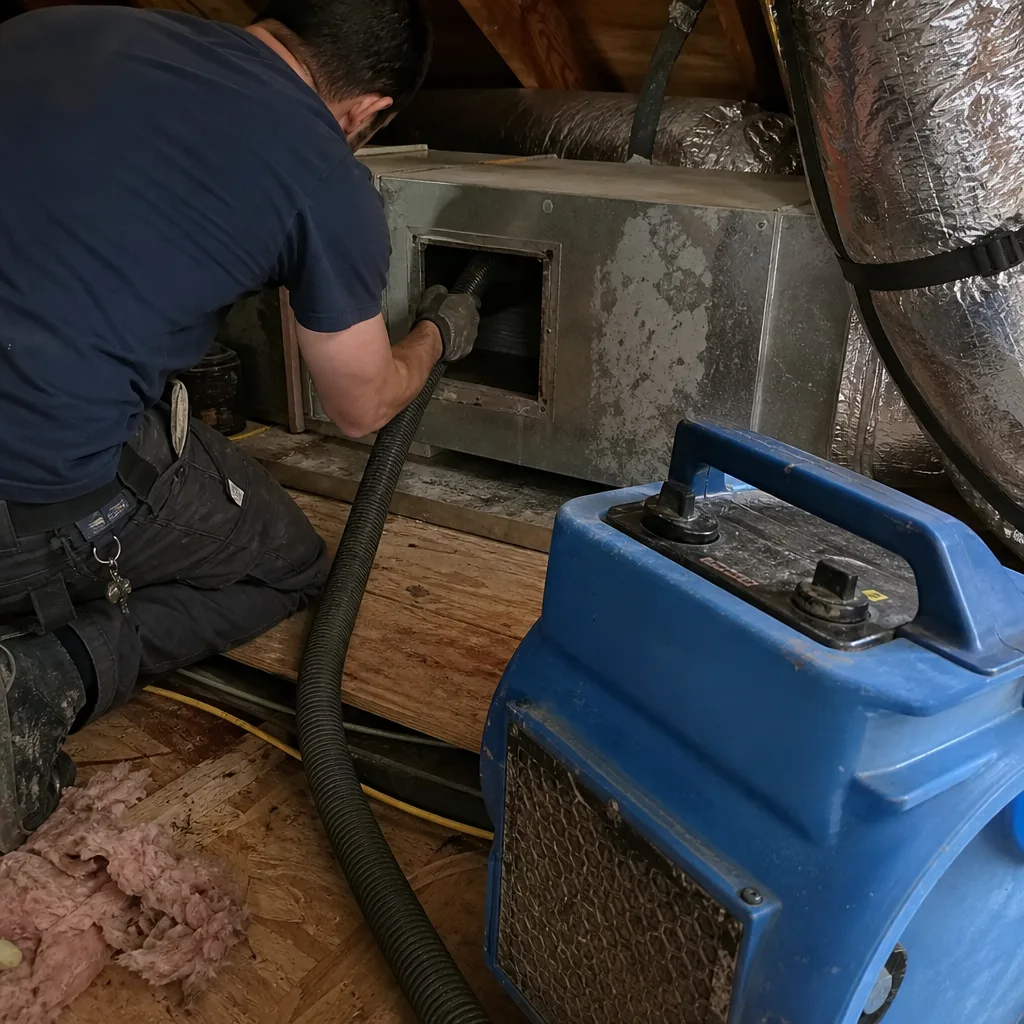 Before
 After
After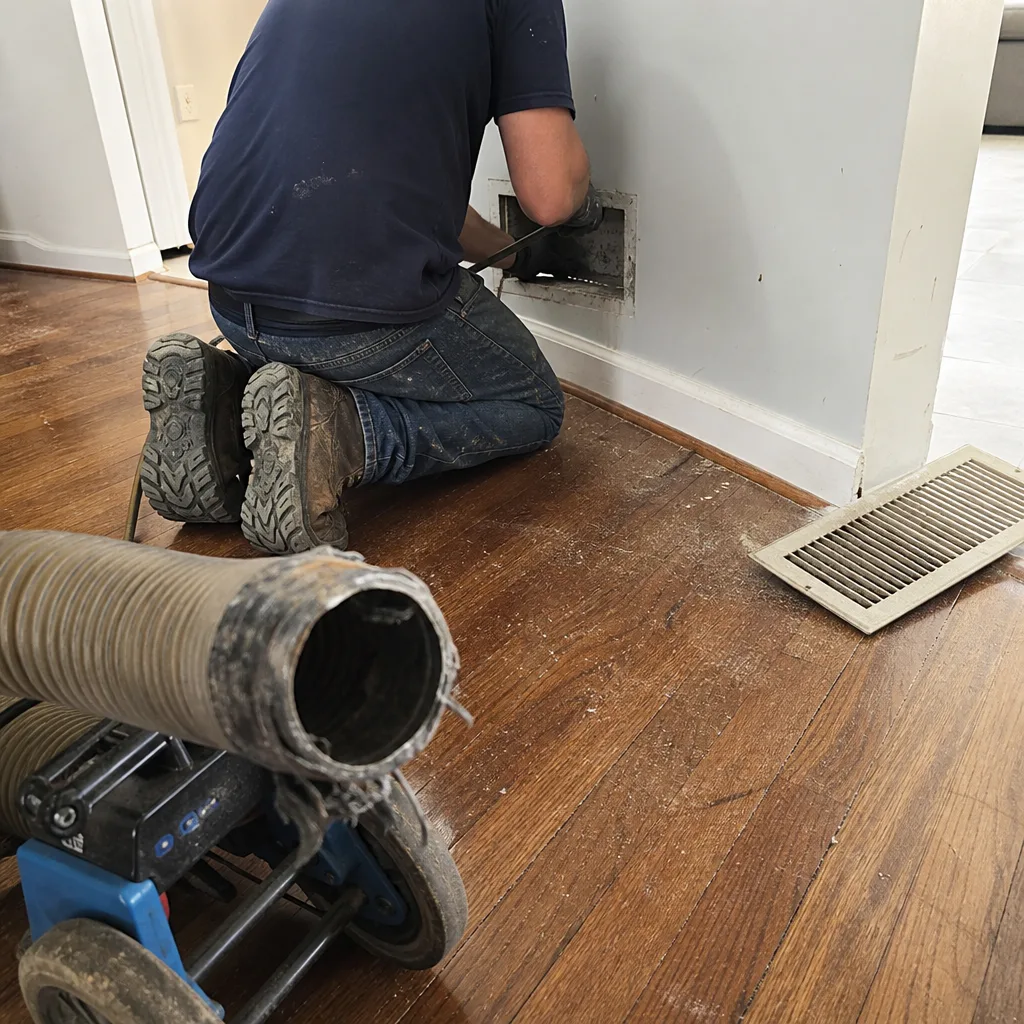 Before
 After
After