
Last updated October 15, 2026
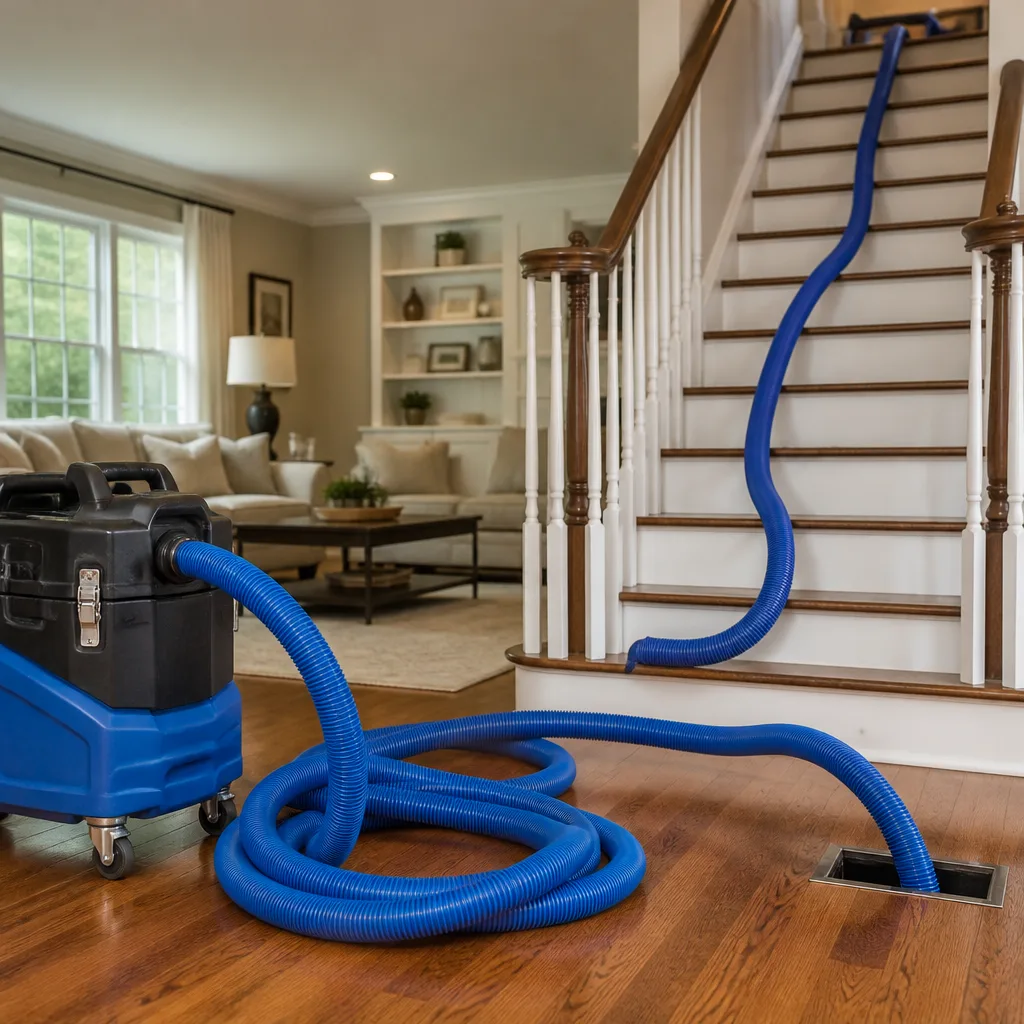 Whole-home duct cleaning
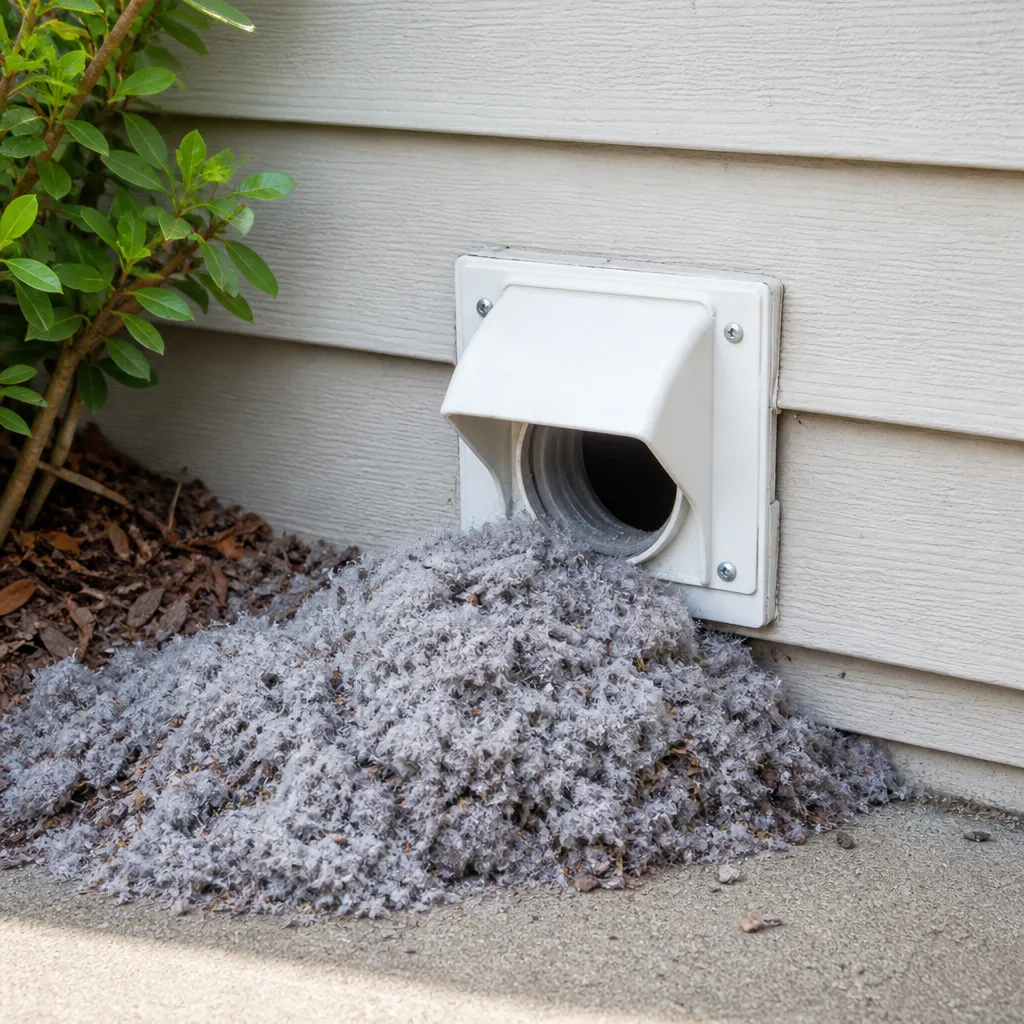 Dryer vent cleaning
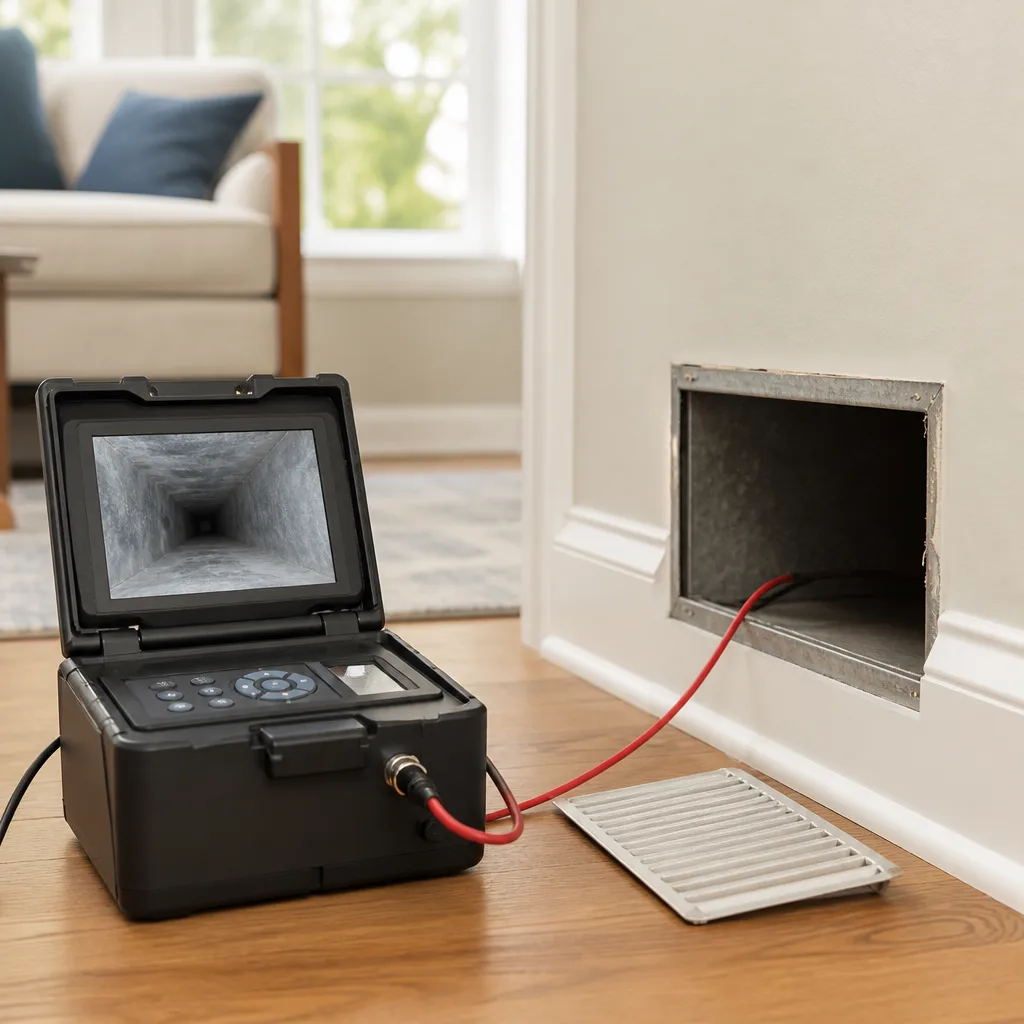 Camera inspection
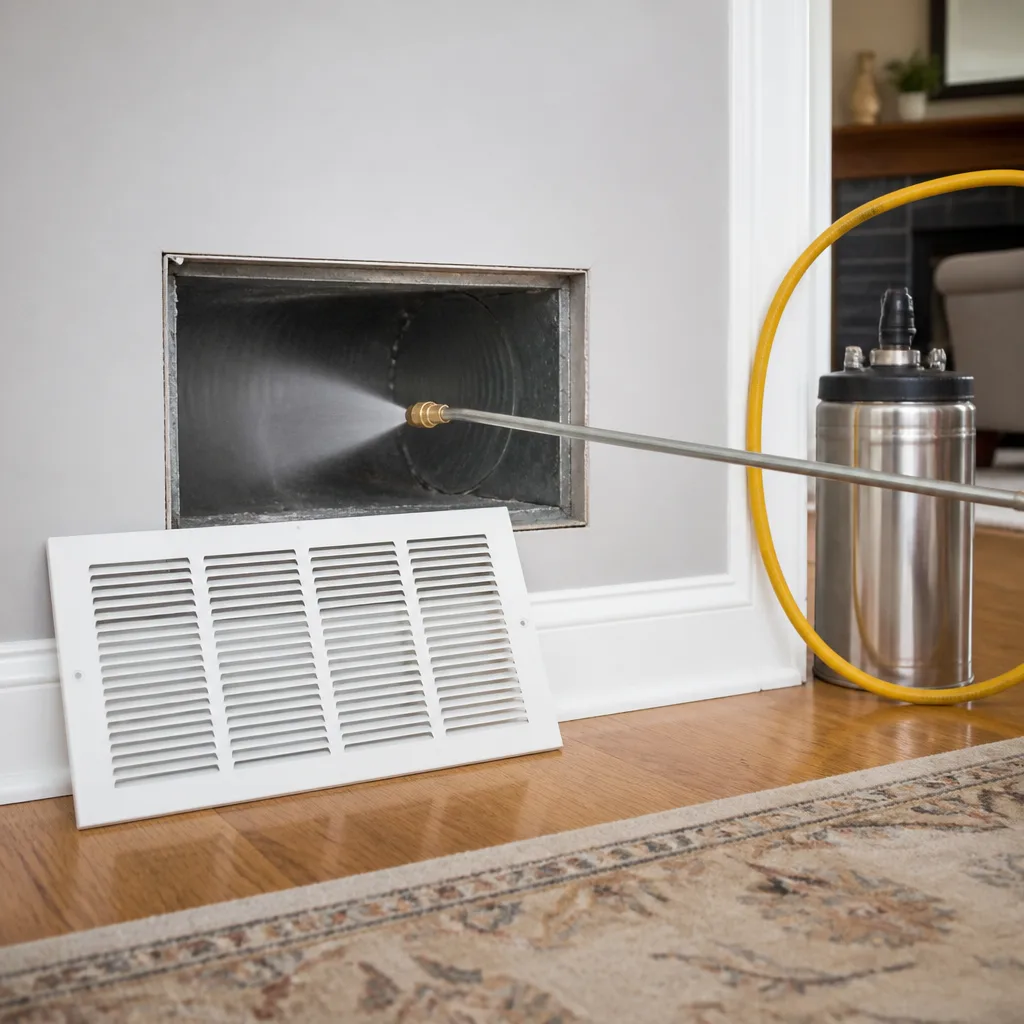 Sanitizing & deodorizing
Whole-system duct and dryer vent check with before-and-after photos - you see exactly what came out of your vents
That "$99 whole-house special" is a bait ad - the real number appears once they are in your hallway, or the "clean" is a shop-vac at the register. We photograph the inside of your ducts before and after instead.
Air Duct Cleaning Warning Signs: A Alpharetta Homeowner’s Reference Guide
Here’s something most duct cleaning articles won’t tell you: the most commonly listed “warning signs” are so broad they describe every home in Alpharetta between May and September. Sneezing? That’s Georgia pollen season. Dust on furniture? That’s life north of the Chattahoochee with windows open. What actually matters is knowing which signs mean your ducts need cleaning, which ones mean cleaning alone won’t solve the problem, and which ones mean you need a different contractor entirely. This guide-along with our Complete Guide to Air Duct Cleaning in Alpharetta-sorts it out, with real-world specifics drawn from two decades of work in Alpharetta homes and the particular construction styles, climate patterns, and failure modes we see here.
Styles & brands we work with
Quick Answer
You should consider air duct cleaning in Alpharetta if you see visible dust buildup on register covers, find debris or pest evidence inside accessible ductwork, or notice airflow that’s noticeably weaker in one room than another. But the most useful warning sign is this: if dust recollects on register covers within 30 days of a professional cleaning, the real issue is a duct leak or breach, not a dirty system, and that requires duct sealing in Alpharetta, not another cleaning.
Table of Contents
- The Three Categories of Warning Signs: A Better Way to Sort What You See
- Alpharetta-Specific Warning Signs You Won’t Find in Generic Articles
- Pest Intrusion Evidence: What It Looks Like and Why Cleaning Isn’t Step One
- Your 10-Minute Visual Inspection Protocol
- Post-Cleaning Warning Signs: What Dust Returning Within 30 Days Actually Means
- Mold in Ductwork: The 90-Day Failure You Should Know About
- Common Mistakes to Avoid
- When to Call a Professional
- Frequently Asked Questions
- The Bottom Line
The Three Categories of Warning Signs: A Better Way to Sort What You See
Most articles hand you a list of symptoms and leave you to guess what they mean. Here’s a cleaner framework we use on every Alpharetta job. Warning signs fall into three buckets, and knowing which bucket you’re in saves you money.
Category 1: Cleaning will fix this. These are signs that point directly to accumulated debris in the duct system itself. They include visible dust streaks on wall surfaces near supply registers, a gray film developing on return grilles within two to three weeks of changing your filter, and what looks like fine gray lint drifting from a register when the system kicks on. These are deposits in the ductwork, and a proper Air Duct Cleaning service removes them.
Category 2: Cleaning is part of the fix, but not all of it. Here’s where Alpharetta homeowners get burned. A musty odor that appears when the AC runs, condensation on register faces during humid weeks, or persistent allergy symptoms that spike indoors are often tied to moisture inside the duct system or a leak pulling attic air into the return side. A cleaning will remove the biological growth and debris, but if the moisture source or the breach isn’t fixed, the problem returns in a season or less. These jobs need cleaning plus either duct sealing or a source repair on the moisture side.
Category 3: Duct cleaning is not the right service. Some signs point elsewhere entirely. A burning smell that only appears when the heat runs is often a furnace heat exchanger or wiring issue, not dirty ducts. Air that’s cold and weak in one room usually indicates a disconnected or collapsed flex duct run, which is a repair job, not a cleaning. If you’re seeing this pattern in an Alpharetta home built in the 1990s or early 2000s, it’s common for the flexible duct runs in attics to separate at the boot connections over years of thermal expansion. A cleaning won’t reconnect that duct.
Alpharetta-Specific Warning Signs You Won’t Find in Generic Articles
Alpharetta has construction patterns and climate conditions that create warning signs you won’t see in a generic HVAC article written for a national audience. Here are three we encounter regularly in our service area.
Red clay dust on white register covers. Alpharetta sits on Georgia red clay. If you wipe a white register cover and the cloth comes away reddish-orange, that’s not ordinary household dust. It’s soil particulate, which means one of two things: you have a return-side duct breach pulling air from a crawlspace or foundation area, or a supply-side separation blowing across attic insulation and picking up fine particulates. In either case, the fix needs to address the breach. Cleaning the ducts without sealing the entry point means the red dust returns within weeks. We find this pattern frequently in older sections of Alpharetta where homes have pier-and-beam or partial crawlspace foundations.
High summer humidity at the register face. Alpharetta summers run humid. Walk past a supply register in July and you should feel cold, dry air. If the register face itself is sweating or you feel a damp coolness at the grille, there’s moisture inside the duct system or the duct insulation is compromised. This matters because moist duct interiors are exactly where mold and mildew establish. A moisture meter reading at the register is quick to do during an inspection, and if the number is elevated, a cleaning should be paired with a search for the moisture entry point. Sometimes it’s a bathroom exhaust vented into the duct run. Sometimes it’s a return pulling unconditioned crawlspace air. Both are common in Alpharetta’s housing stock.
Uneven airflow by room. Walk your home on a summer afternoon and feel each supply register. If one bedroom is noticeably weaker than the master suite, don’t assume it’s “just how the house is.” In Alpharetta homes built before 2010, flex duct runs in attic spaces often sag, kink, or separate at the plenum connection over time. A disconnected run means you’re conditioning attic space instead of the bedroom. This is not a cleanliness problem, and no amount of duct cleaning fixes it. It’s a repair issue, and the right contractor will tell you that before quoting anything.
Pest Intrusion Evidence: What It Looks Like and Why Cleaning Isn’t Step One
Pest activity in ductwork is a serious concern for Alpharetta homeowners, particularly in neighborhoods with mature tree cover and attic-accessible HVAC systems. Squirrels, rats, and occasionally birds find their way into return ducts or make nests in attic duct insulation. Here’s what to look for.
Droppings and nesting material. When you remove a register cover and shine a flashlight into the duct, you may see small dark droppings, shredded insulation, twigs, or nesting material. Rat droppings are typically 1/2 to 3/4 inch, dark, and capsule-shaped. Squirrel droppings are slightly larger and more rounded. If you see any of this, do not attempt to clean it yourself. Pest-contaminated ductwork requires precautions, and a naked shop vac makes the situation worse by aerosolizing particulates into your living space.
Entry points near boot connections. The boot is the metal fitting that connects a duct run to the register in your ceiling, wall, or floor. In attic systems, gaps around the boot where it penetrates the ceiling plane are common entry points. Look for daylight gaps, chewed insulation, or disturbed areas around the boot. Also check where duct runs pass through attic eaves or near soffit vents.
Why exclusion comes first. This is the part most homeowners don’t anticipate. If you clean ductwork that has active pest entry, you’re cleaning a highway that’s still open. The animals return, redeposit waste, and the cleaning is wasted money. The correct sequence is exclusion first: seal the entry points, confirm the pests are gone, then clean and sanitize the duct system. A contractor who skips straight to cleaning is not doing you a favor. In Alpharetta, we have worked with pest control partners on sequencing these jobs, and the homeowner who addresses exclusion first always gets a better outcome.
Your 10-Minute Visual Inspection Protocol
Before you call anyone, do this inspection yourself. It takes about ten minutes and gives you concrete observations to discuss with a contractor instead of vague symptoms. You’ll need a flashlight and your phone camera.
- Turn off the HVAC system at the thermostat. You want settled debris visible, not air moving through the system while you look.
- Choose three representative registers. One in the room farthest from the air handler, one in the room closest to it, and one in the middle of the home. Remove the register covers.
- Photograph the register cover before wiping it. A photo gives you a baseline for what “normal” dust accumulation looks like in your home, which is useful for comparison later.
- Wipe the inside of the register cover with a clean white cloth. Note the color and amount. Gray dust is ordinary household particulate. Reddish dust suggests soil intrusion (see the Alpharetta-specific section above). Black or green spots suggest biological growth.
- Shine the flashlight into the duct opening. Look for visible dust accumulation on the duct walls, debris, droppings, nesting material, or gaps where the duct meets the register boot. Photograph anything notable.
- Check the return register. Look at the filter. If the filter is clogged gray or brown and it’s been installed for 30 to 60 days, your return side is pulling significant particulate. A return grille that develops a visible film quickly is a useful data point.
- Repeat in a second room if the first is clean. Duct buildup is rarely uniform. A single clean register doesn’t mean the system is clean throughout.
This inspection gives you a factual basis for a conversation with any contractor. When you call us at Hollis Air Duct Alpharetta, you’ll be able to say exactly what you saw, which helps us give you a straight answer about whether cleaning is the right service before we ever schedule a visit.
Post-Cleaning Warning Signs: What Dust Returning Within 30 Days Actually Means
This is the warning sign most articles miss entirely. You paid for a professional cleaning. The registers were spotless. And then, inside a month, the dust is back. Here’s what that means and why it matters.
It is not a cleaning frequency problem. A properly cleaned duct system in a typical Alpharetta home stays visibly clean for a year or more, assuming the filter is changed regularly and the home isn’t undergoing renovation work. If significant dust returns in 30 days, something is actively feeding that dust into the system. You don’t need another cleaning. You need to find the breach.
The most common culprit: return-side leaks. Your return ducts pull air from the living space back to the air handler. When a return duct has a gap or separation, particularly in an attic or crawlspace, it pulls unfiltered air from that space directly into the system. That air bypasses your filter and deposits whatever it carries, which might be insulation fibers, dust, or crawlspace soil particulate, into your supply runs. This is a duct integrity problem. In our experience in Alpharetta, return-side breaches are responsible for the large majority of “the dust came back” complaints on jobs done by other contractors.
Supply-side separations also matter. If a supply run separates at the plenum or at a register boot, it’s blowing conditioned air into the attic or wall cavity. The room it served gets weak airflow, and the system works harder to compensate. This is a repair, not a cleaning. The fix, duct sealing in Alpharetta, addresses the gap with mastic or mechanical fastening and is covered by a written price before the work starts, which is the only way we do it.
What to do if this happens to you. If dust returns within 30 days of a cleaning, document it. Photograph the registers. Then call the company that performed the cleaning. A reputable contractor will return to investigate, not upsell you on a second cleaning. At Hollis Air Duct Alpharetta, this is exactly what our 365-Day Done Right Promise is for. If the work doesn’t hold up, we come back. It’s written on every job, and it doesn’t require negotiation.
Mold in Ductwork: The 90-Day Failure You Should Know About
Visible mold growth inside ductwork is frequently cited as a reason to book a duct cleaning. Here’s what a disciplined contractor will tell you that a less careful one won’t: cleaning mold from a duct system without addressing the moisture source that grew it is a service that fails within 90 days. The mold regrows, and you’ve paid for a cleaning that didn’t solve the problem.
Mold needs three things: a food source, which dust in your ducts provides plentifully; the right temperature, which the inside of your ductwork has year-round; and moisture, which is the one variable a cleaning can change but not permanently. Moisture enters duct systems from condensation at uninsulated boots in humid Alpharetta attics, from bathroom exhaust fans vented into the return or supply plenum, from crawlspace air pulled through return breaches, or from oversized AC units that short-cycle and never dehumidify properly. If any of these conditions exists, mold regrows regardless of how thoroughly the ducts are cleaned.
The correct sequence looks like this: identify the moisture source, fix the moisture source, clean the duct system, and then verify with a follow-up inspection. This may mean a dehumidifier, an attic ventilation correction, a return-side seal, or an HVAC equipment adjustment before the cleaning happens. A contractor who skips straight to the cleaning is selling you a 90-day result. We don’t do that at Hollis. If we see mold during an inspection, we’ll tell you what’s feeding it before we quote a cleaning, because a guarantee means nothing if the root condition is still active.
Common Mistakes to Avoid
- Calling a duct cleaner for an airflow problem. Weak airflow in one room is usually a disconnected or collapsed duct run, which requires repair, not cleaning. Have a contractor diagnose before scheduling a cleaning.
- Accepting a quote based on square footage alone. Duct systems are not priced by the square foot of the house. A reputable contractor prices based on the number of supply and return runs, the system type, and the accessibility. Be wary of any quote that doesn’t involve someone looking at your actual system.
- Using a high-MERV filter and expecting it to compensate for dirty ducts. A high-MERV filter traps more particulates at the return, but it does nothing for debris already downstream in your supply runs. It can also restrict airflow if your system wasn’t designed for it, which is a separate problem in many older Alpharetta homes.
- Buying the cheapest bid. The air duct cleaning trade has a documented bait-and-switch problem. A low teaser price often becomes a larger invoice once the crew is in the home and “finds” additional problems. The right question to ask is: what’s the total written price for the complete job, and does it include everything?
- Treating all dust as a problem. Some dust is normal and doesn’t mean your ducts need cleaning. If you change your filter regularly and you’re not seeing the specific signs in this guide, you may not need service. A contractor who tells you that earns your trust.
- Ignoring post-cleaning warning signs. Dust returning within 30 days of a professional cleaning is a duct integrity failure, not a frequency issue. Don’t schedule another cleaning. Find and fix the breach.
When to Call a Professional
Call a professional when your self-inspection turns up visible mold growth, pest evidence, reddish dust at register covers, or airflow that’s noticeably uneven between rooms. Call when dust returns quickly after a cleaning, because that’s a system failure that needs diagnosis. And call when you’re ready for a straight answer about whether cleaning is the right service for what you’re seeing. Hollis Air Duct Alpharetta offers free estimates in Alpharetta, and the price is written before any work starts. Call (762) 769-7145 and talk to a live person, any hour of the day.
Frequently Asked Questions
Expect to pay between $350 and $650 for a complete air duct cleaning on a typical Alpharetta home with 8 to 12 supply runs, depending on system size, accessibility, and whether additional services like sanitizing are included. This is the whole-system price, not a per-vent figure. Be wary of quotes below $250, which are almost always teaser prices that grow once the technician is inside. Call (762) 769-7145 for an exact written quote for your home. Estimates are free, and the price we write is the price you pay.
Because the low bid is often a marketing tool, not an honest price. A company quoting $99 or $149 is typically planning to find reasons to raise the price once the crew arrives. The math doesn’t work otherwise: professional-grade equipment, background-checked technicians, and proper insurance cost money. At Hollis Air Duct Alpharetta, the price is written before any work starts and it doesn’t move at the door. That’s The Garrison Standard, and it’s how we’ve operated in Alpharetta since 2004.
Every 3 to 5 years for most Alpharetta homes, with two caveats: homes with pets that shed heavily or residents with significant allergies may benefit from every 2 to 3 years, and homes with confirmed duct breaches or moisture problems need those issues fixed before any cleaning interval is meaningful. If a contractor tells you annual cleaning is mandatory, they’re selling you a subscription, not a service.
You should receive before-and-after photos of your ducts, specifically the supply runs and return plenum, taken with the inspection camera. You should also see the register covers cleaned and reinstalled properly. At Hollis, we document the work with photos and walk you through what we found and what we did. That’s part of the job, not an add-on.
Not necessarily. Mold in ductwork indicates a moisture problem that needs correction, but a single visible colony inside a supply boot is a fixable condition, not a reason to panic. The responsible response is to have a contractor assess the moisture source, fix it, and clean the system. The irresponsible response is to clean the mold without fixing the moisture and declaring the problem solved. It comes back, usually within a season.
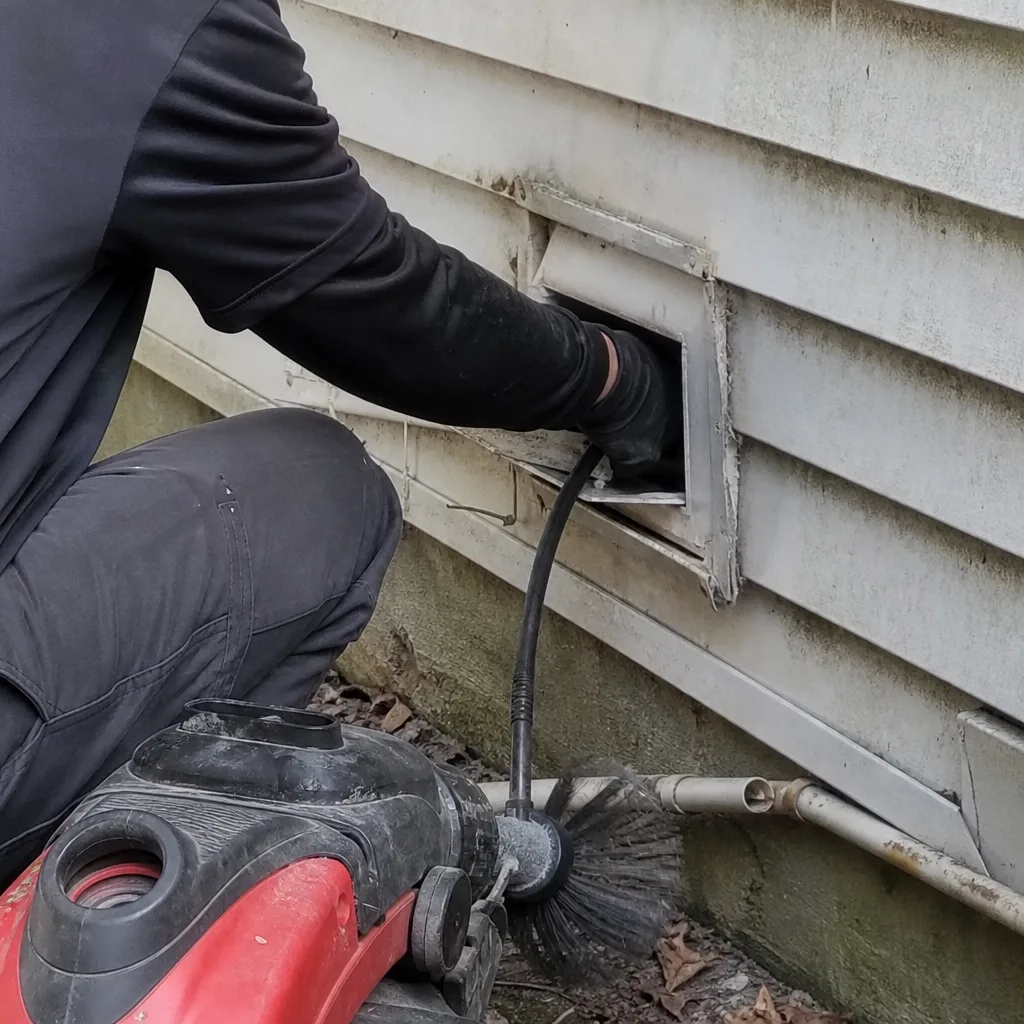
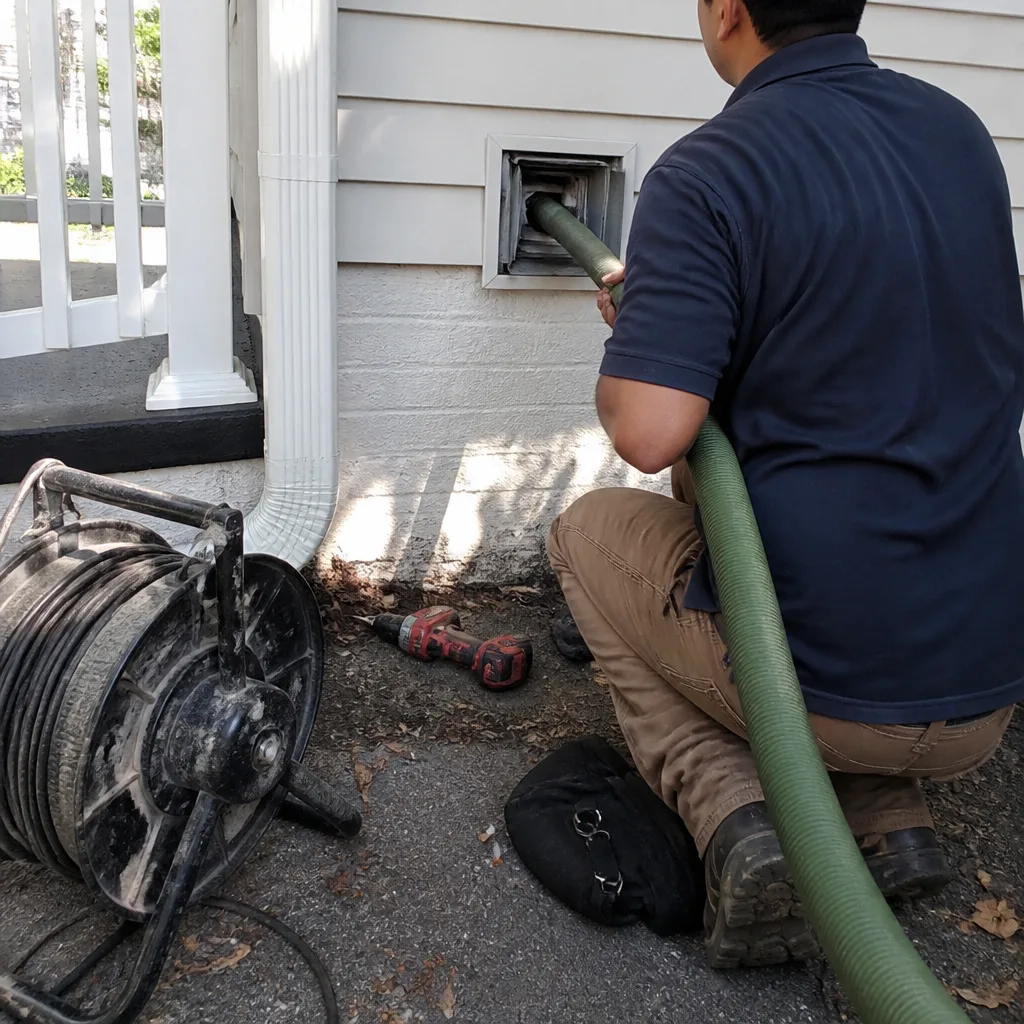
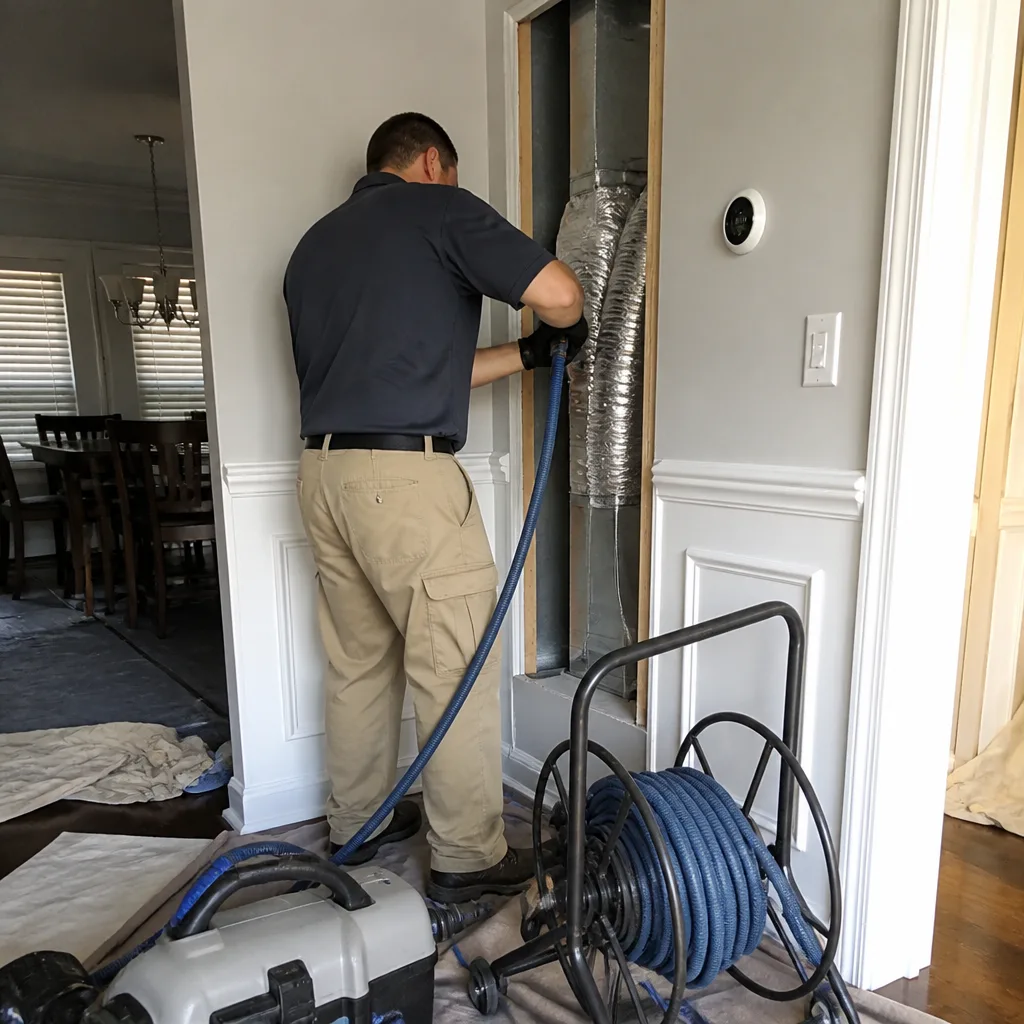
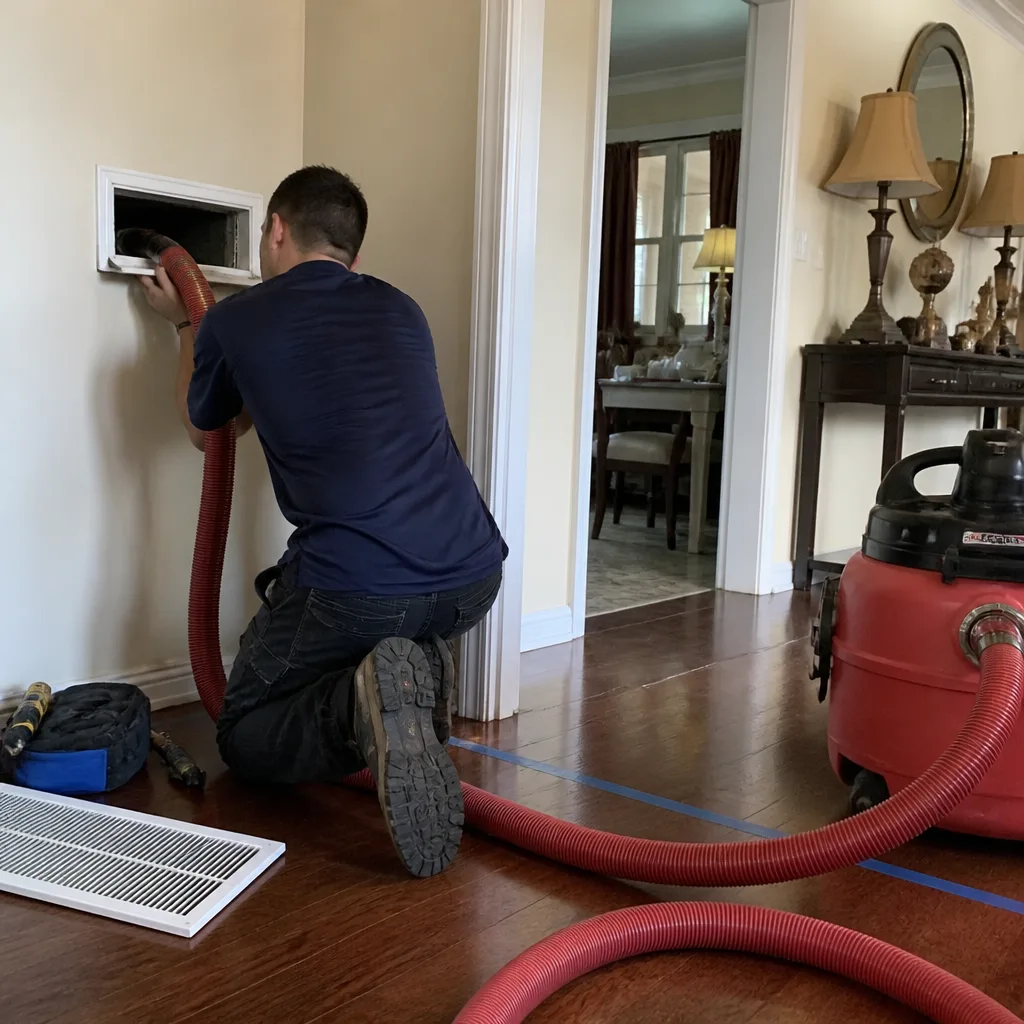
You can clean the visible portions: register covers, accessible duct openings, and the area around the return grille. You cannot clean the full length of a duct run with household tools, and attempting aggressive DIY cleaning risks damaging flex duct connections. The negative-air method used by professional crews creates suction that pulls loosened debris out of the system while a rotary brush agitates the duct walls. That’s equipment like the Rotobrush and Nikro systems we run, and it’s not something a shop vac replicates. If you’ve done your visual inspection and found genuine buildup, that’s a job for a professional. See our DIY vs Professional Air Duct Cleaning guide for a full comparison.
The Bottom Line
Warning signs for air duct cleaning in Alpharetta are only useful when they tell you which problem you actually have. Dust and sneezes describe every Georgia home in summer. Red clay dust at register covers, air that’s weak in one room, visible biological growth inside a duct, or pest evidence at a register boot each point to a specific issue with a specific fix. Cleaning solves accumulated debris. Sealing solves breach problems. Moisture repair solves mold problems. The skill worth paying for is the diagnosis that tells them apart, which is what we provide free of charge. For more guides & resources, or if you’re seeing something in your ducts you can’t identify, call (762) 769-7145 and describe it. We’ll tell you honestly whether cleaning is the right service or not.
Written by Roy Castellanos, Owner at Hollis Air Duct Alpharetta, serving Alpharetta since 2004.
See the difference
 Before
 After
After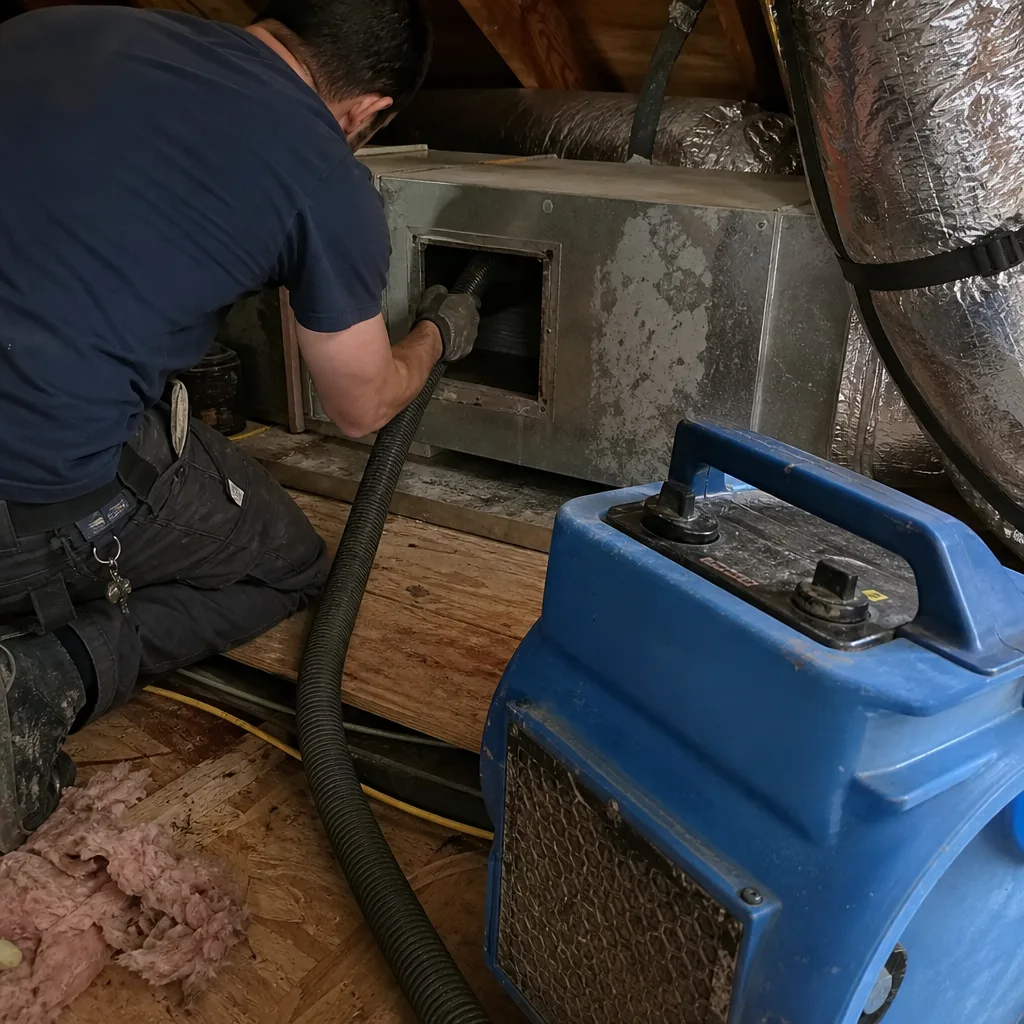 Before
 After
After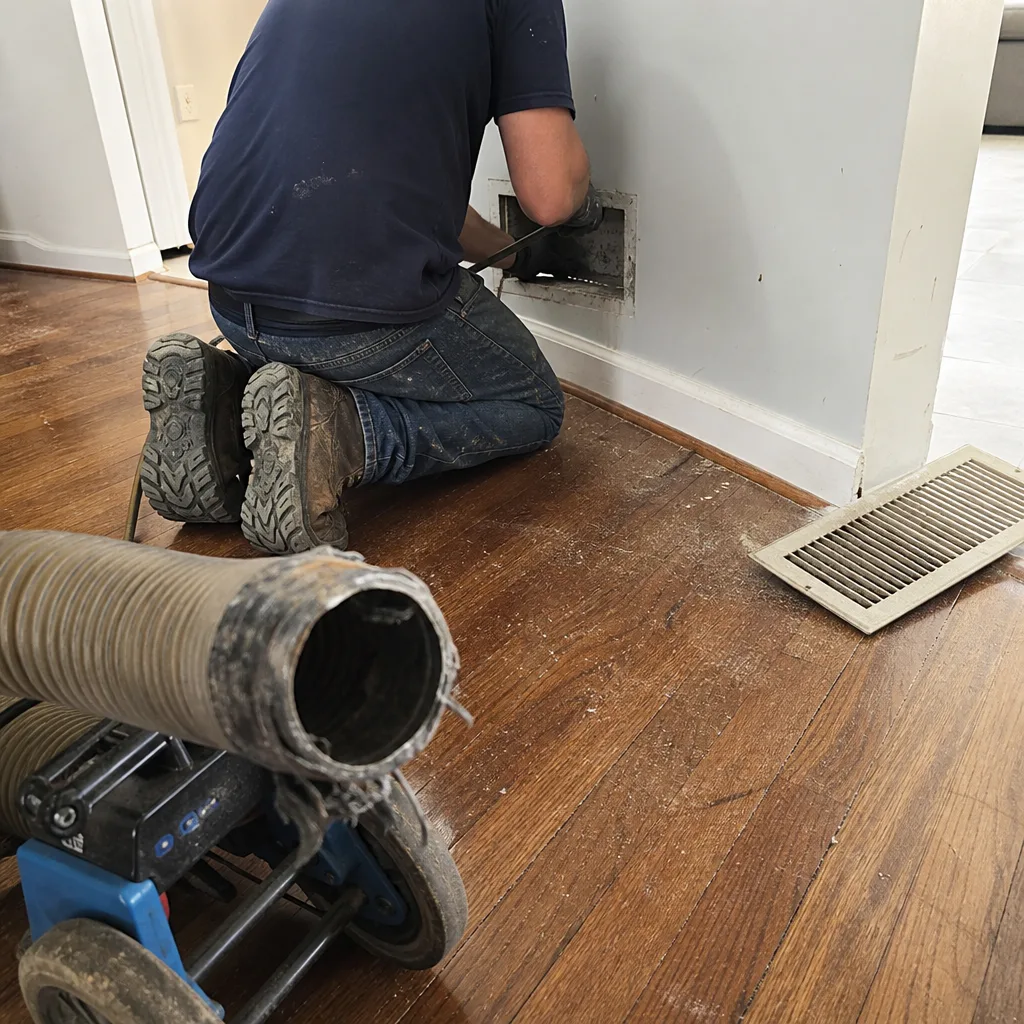 Before
 After
After